Dec 25, 2025
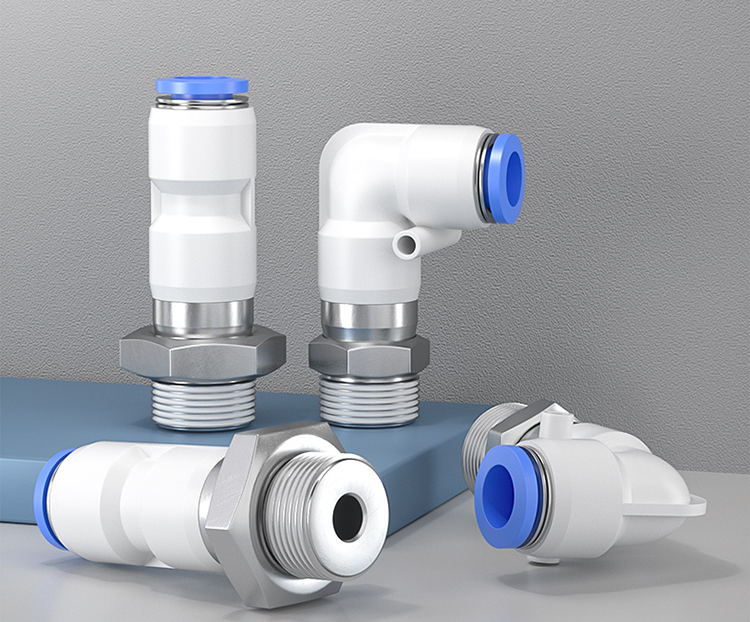
In automated equipment, motion rarely happens in straight lines only. Rotary tables, indexing mechanisms, winding machines, robotic arms, and packaging equipment all require continuous rotation while maintaining a stable air supply. This is where a rotary quick coupling becomes a critical yet often underestimated component. Its role is simple in theory but demanding in practice: allow hoses or pipelines to rotate freely without twisting, leaking, or prematurely wearing out.
For distributors, equipment engineers, and procurement managers, understanding how a high speed rotary joint actually works—and where its limitations lie—helps avoid misapplication, downtime, and hidden maintenance costs.
A conventional quick-connect coupling is designed for static connections. Once connected, both ends are expected to remain fixed. When rotation is introduced, friction builds rapidly, seals wear unevenly, and hoses begin to twist like over-tightened cables.
A rotary quick coupling solves this problem by structurally separating the fixed and rotating sides. Inside the coupling, a bearing is installed between the metal valve body and the polymer or secondary housing, allowing one side to rotate smoothly while the other remains stationary. This simple structural addition dramatically changes performance.
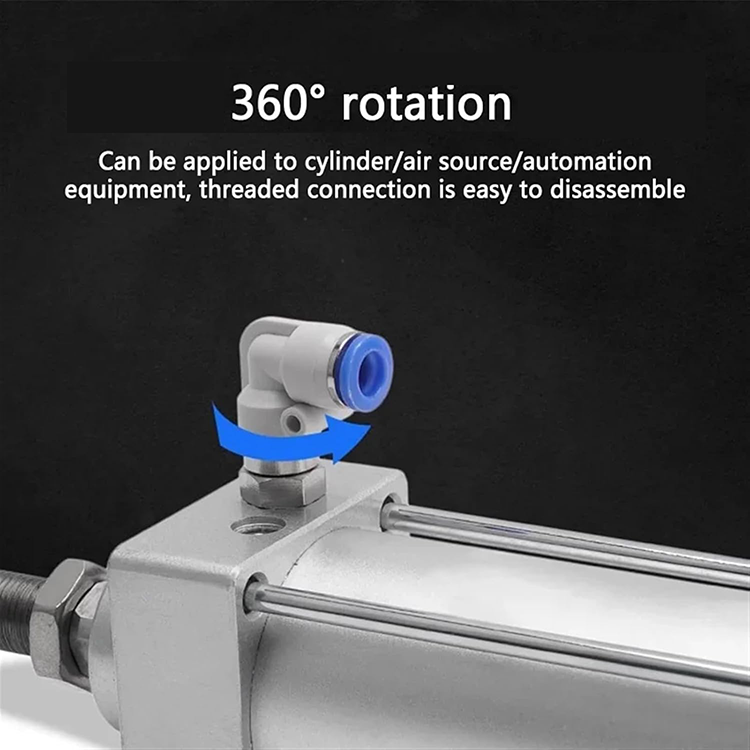
Unlike ordinary quick coupling designs, a pneumatic rotary coupling maintains airflow stability even under continuous motion, making it suitable for rotating cylinders, spindles, and indexing platforms. The difference is not cosmetic—it is mechanical and functional.
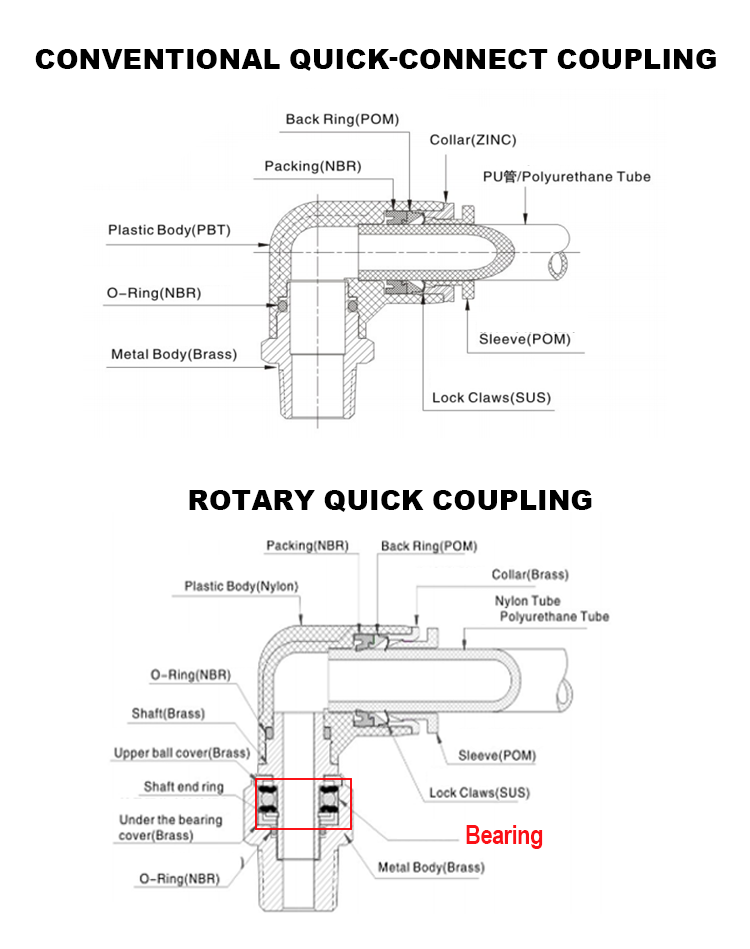
At the core of a rotary quick connector is the bearing system. Typically, the inner metal valve body carries the pressurized air path, while the outer housing interfaces with the hose or tube. The bearing sits between these two sections, absorbing rotational forces and isolating them from the sealing surfaces.
This design offers two critical advantages.
◆First, the seals are no longer subjected to torsional stress, significantly extending service life.
◆Second, rotation remains smooth and predictable, even at higher speeds, which is essential for automation cycles measured in milliseconds.
In well-designed rotary coupling units, bearing selection is matched to expected speed, load, and duty cycle. Low-friction bearings reduce torque, while precision machining ensures concentric alignment—both essential for minimizing vibration in high-speed applications.
Rotary quick couplings are most effective where motion is repetitive and continuous rather than occasional. In automated assembly lines, for example, rotary indexing tables rely on uninterrupted air supply to actuate clamps or grippers while rotating between stations.
Packaging machinery is another common application. Film winding systems, bottle labeling equipment, and carton turntables often integrate a 1/4 quick coupler rotary version to save space while maintaining flexibility. In these cases, compact size and reliable sealing matter as much as rotational freedom.
Robotic systems also benefit. End-of-arm tooling that rotates—such as vacuum grippers or pneumatic screwdrivers—requires a high speed rotary joint to prevent hose entanglement. Without it, maintenance intervals shorten dramatically.
One of the most important usage rules for a pneumatic rotary coupling is often overlooked: avoid water exposure. The bearing inside the coupling relies on grease or oil-based lubrication to maintain low friction and long life.
When water enters the system—either from humid compressed air or direct environmental exposure—it can wash away bearing lubrication, leading to increased friction, noise, and ultimately seizure. Even stainless steel components cannot fully compensate for lubrication loss at the bearing level.
For applications involving water, coolant mist, or frequent washdowns, engineers should consider alternative solutions such as sealed rotary unions designed specifically for fluids, or install upstream air dryers and moisture separators. This distinction is critical when selecting from a high speed rotary joint rather than choosing based on size alone.
Under proper conditions—clean, dry compressed air and moderate rotational speeds—a quality rotary quick coupling delivers a long and stable service life. Maintenance requirements are minimal, as the bearing is typically sealed and pre-lubricated.
However, once abnormal noise, increased rotational resistance, or air leakage appears, replacement is recommended rather than repair. Disassembly often compromises factory alignment and sealing integrity. Educating end users on this point reduces downtime and avoids secondary damage to hoses or actuators.
Clear installation guidance and correct application selection remain the most effective ways to maximize lifespan, especially in automated systems operating around the clock.
As a global pneumatic component supplier, FOKCA Automation supports distributors, equipment manufacturers, and end users with both standard and customized rotary quick coupling solutions. With experience across automation, packaging, and industrial equipment, FOKCA focuses on stable rotation performance, reliable sealing, and application-matched design.
Beyond standard sizes like the widely used 1/4 quick coupler, FOKCA provides OEM/ODM support for special structures, material combinations, and integration requirements. This flexibility allows customers to solve real motion challenges rather than adapt equipment around generic components.
For applications where rotation and air supply must coexist seamlessly, choosing the right rotary coupling is not optional—it is foundational to system reliability.
For more information or to place an order, feel free to contact us.
(FK9026)
 PVC Tubing vs Polyurethane Tubing: Choosing the Better Air Hose for Modern Pneumatic Systems
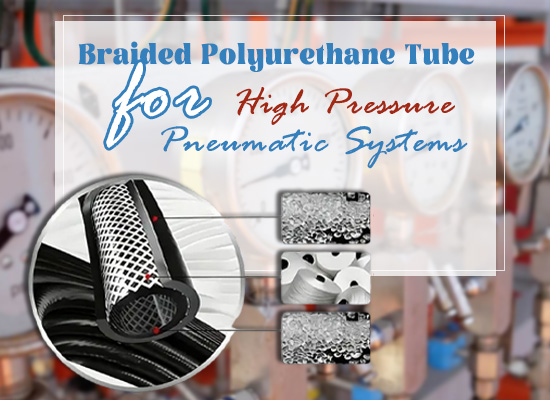 Braided Polyurethane Tube for High Pressure Pneumatic Systems
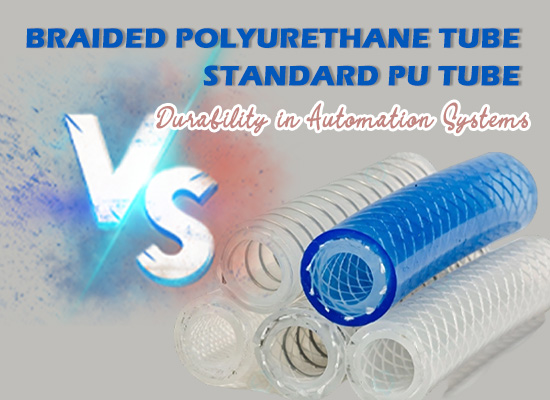 PUB Braided Polyurethane Tube vs Standard PU Tube: Durability in Automation Systems
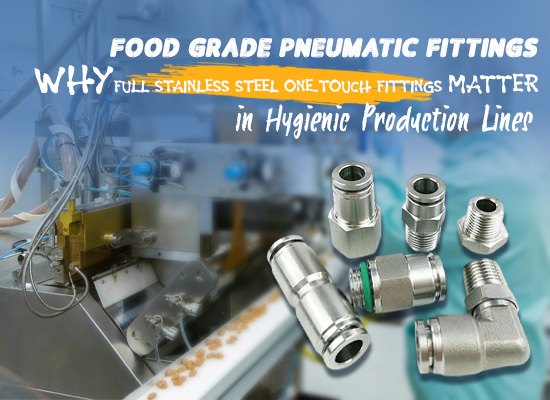 Food Grade Pneumatic Fittings: Why Full Stainless Steel One-Touch Fittings Matter in Hygienic Production Lines
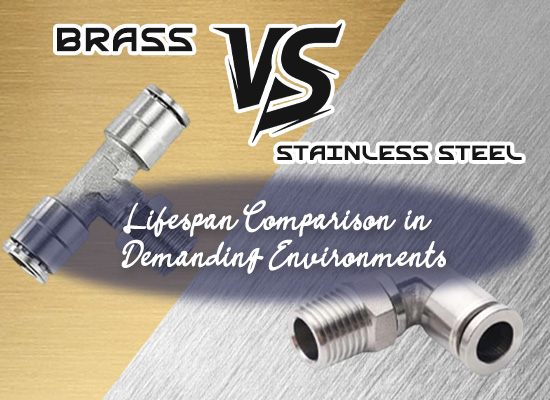 Brass vs Stainless Steel Fittings: Lifespan Comparison in Demanding Environments
You May Interest In
Dec 23, 2025 Blog
How to install compression fitting on copper pipe
Dec 22, 2025 Blog
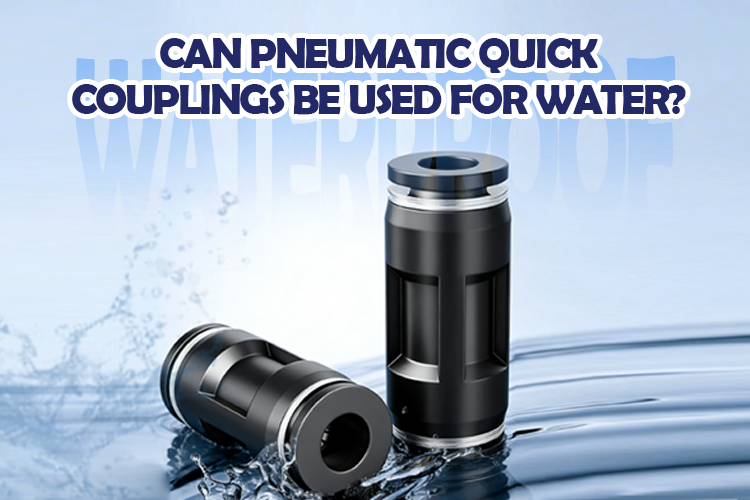
Can Pneumatic Quick Couplings Be Used for Water


Dec 10, 2025 Blog
How to Choose and Use Rapid Pneumatic Fittings
Dec 08, 2025 Blog
PU Braided Hose for High-Pressure Pneumatic Systems
Dec 05, 2025 Blog
How to Repair a Damaged Hose Using a Hose Mender


Get a free sample

Links: www.fescolo.com(Pneumatic)
FOKCA ©1998-2025 All Rights Reserved Sitemap