Dec 24, 2025
In pneumatic systems, failures rarely start with dramatic explosions. More often, they begin quietly: a PU tube bulges, fittings loosen, airflow becomes unstable, and pressure drops without an obvious reason. In many real-world cases, the root cause is not poor material quality but a misunderstanding of the wall thickness of a pipe and how it determines pressure resistance. For distributors, engineers, and buyers alike, wall thickness is not a secondary detail—it directly defines safety margins, service life, and system reliability.
From a mechanical perspective, internal pressure always tries to expand a tube outward. The thicker the wall, the more material is available to resist that force. This is why, across industries, the rule of thumb holds true: greater wall thickness equals higher pressure capacity, assuming the same material and diameter.
In PU tubing, this relationship is even more critical because polyurethane is flexible by design. A thin-walled tube may perform well at low pressure, but under higher loads it stretches, leading to micro-deformation that accelerates fatigue. Engineers often describe this using simplified pressure wall thickness calculation logic: internal pressure must be balanced by the tensile strength of the tube wall. When wall thickness increases, stress per unit area decreases, improving stability and longevity.
Polyurethane offers excellent abrasion resistance, elasticity, and chemical tolerance, making it ideal for automation. However, material strength alone cannot compensate for insufficient geometry. Two PU tubes made from the same compound can have vastly different pressure ratings simply due to wall thickness.
In practical applications, a thin tube behaves like an elastic band under pressure—easy to route, but prone to expansion. A thicker wall behaves more like a reinforced sleeve, holding its shape even when pressure fluctuates. This is why tubing wall thickness pressure rating is always specified separately from material type in professional datasheets. For OEMs and distributors, overlooking this detail often leads to premature replacements and customer complaints.
To make selection clearer, engineers rely on a wall thickness of pipe chart, which correlates outer diameter (OD), inner diameter (ID), and maximum working pressure. Below is a simplified example commonly used in pneumatic systems:
Tube Size (OD × ID) | Wall Thickness | Max Working Pressure* |
6 × 4 mm | 1.0 mm | 8 bar |
8 × 5 mm | 1.5 mm | 10 bar |
10 × 6.5 mm | 1.75 mm | 12 bar |
12 × 8 mm | 2.0 mm | 14 bar |
Data based on industry testing standards and manufacturer benchmarks.
What stands out is the pattern: even a 0.5 mm increase in wall thickness can raise allowable pressure by several bar. For equipment engineers, this difference often determines whether a system runs safely at peak load or operates permanently near its limit.
Although PU tubes are not classified as pressure vessels, the same physics applies. In wall thickness for pressure vessel design, engineers calculate the minimum thickness required to contain internal pressure without yielding. Pneumatic tubing follows a similar principle, just at a smaller scale and with flexible materials.
When pressure surges occur—such as rapid valve switching or emergency stops—the effective pressure inside the tube can temporarily exceed nominal values. Thicker walls provide a buffer against these spikes. This is why experienced engineers rarely select tubing based only on “normal” operating pressure; they choose wall thickness that can tolerate dynamic pressure fluctuations over thousands of cycles.
Not all applications require maximum thickness. Over-specifying can increase cost and reduce flexibility, while under-specifying risks failure. The key is matching wall thickness to real operating conditions.
For static, low-pressure lines, such as signal air or sensor connections, thinner walls may be acceptable and easier to install. In contrast, high-cycle automation, robotic arms, or long-distance air supply lines benefit from thicker walls that resist fatigue and pressure loss. In food processing or medical equipment, where safety margins are non-negotiable, thicker PU tubing also adds confidence against accidental overpressure.
Distributors often see repeat orders shift toward thicker-wall models once end users experience fewer leaks and longer service intervals—an insight that directly affects inventory strategy.
While theoretical formulas exist for pressure wall thickness calculation, real-world selection usually combines calculation with empirical data. Manufacturers test tubing under controlled conditions to determine safe working pressure and burst pressure. The recommended working pressure is typically one-third to one-fourth of burst pressure, ensuring long-term durability.
For buyers and engineers, the takeaway is simple: do not rely solely on outer diameter. Always confirm wall thickness of pipe and corresponding pressure rating from verified data. This approach aligns with ISO pneumatic guidelines and reduces liability risks in industrial environments.
At first glance, thicker tubing costs slightly more per meter. However, over time it often proves more economical. Thicker walls mean less deformation, more stable airflow, and fewer replacements. In automated production lines, even a short downtime caused by tube failure can outweigh the initial material savings of thinner tubing.
Procurement managers increasingly factor this into sourcing decisions, preferring suppliers who clearly specify wall thickness and pressure limits rather than offering vague “standard pressure” claims. This transparency builds trust across the supply chain.
As a global pneumatic component supplier, FOKCA Automation works closely with distributors, OEMs, and equipment engineers to match tubing specifications to actual operating conditions. Our PU tubing range covers multiple wall thickness options, allowing customers to balance flexibility, pressure resistance, and cost without compromise.
For applications requiring higher pressure or longer service life, FOKCA provides thicker-wall PU tubes tested under industrial standards. Combined with compatible fittings and valves, this ensures system-level reliability rather than isolated component performance. You can explore related solutions through our PU tubing selection guide and pneumatic fittings compatibility resources, helping teams make confident, data-driven decisions.
If you have any requirements or questions,please feel free to Contact us.
(FK9026)
 PVC Tubing vs Polyurethane Tubing: Choosing the Better Air Hose for Modern Pneumatic Systems
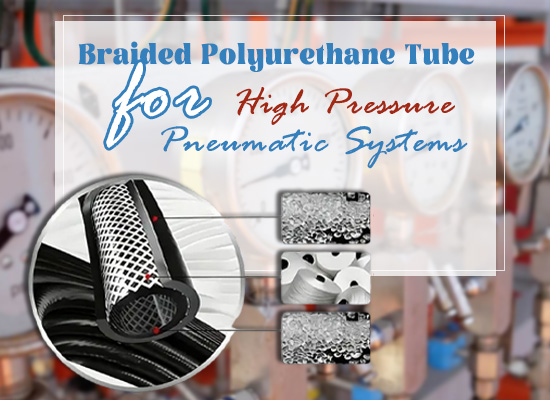 Braided Polyurethane Tube for High Pressure Pneumatic Systems
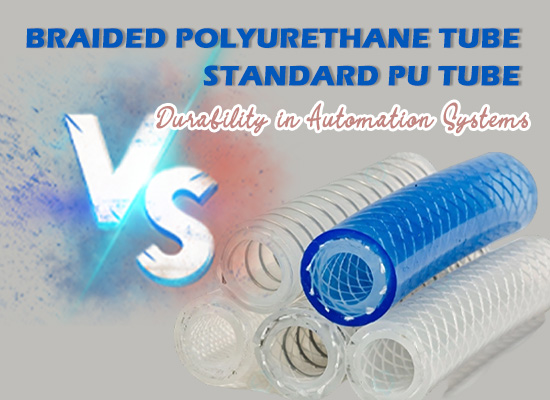 PUB Braided Polyurethane Tube vs Standard PU Tube: Durability in Automation Systems
 Food Grade Pneumatic Fittings: Why Full Stainless Steel One-Touch Fittings Matter in Hygienic Production Lines
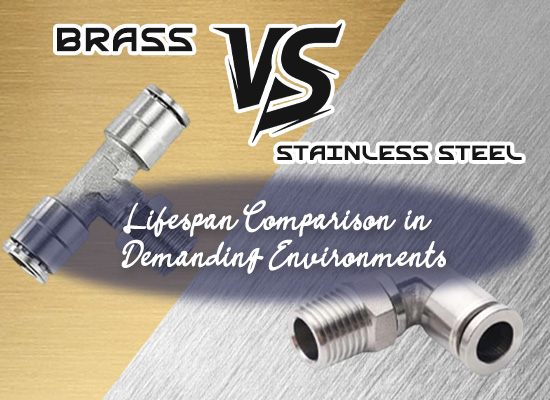 Brass vs Stainless Steel Fittings: Lifespan Comparison in Demanding Environments
You May Interest In
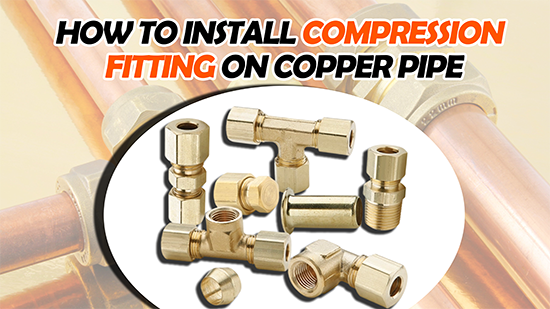
Dec 23, 2025 Blog
How to install compression fitting on copper pipe
Dec 22, 2025 Blog
Can Pneumatic Quick Couplings Be Used for Water




Dec 08, 2025 Blog
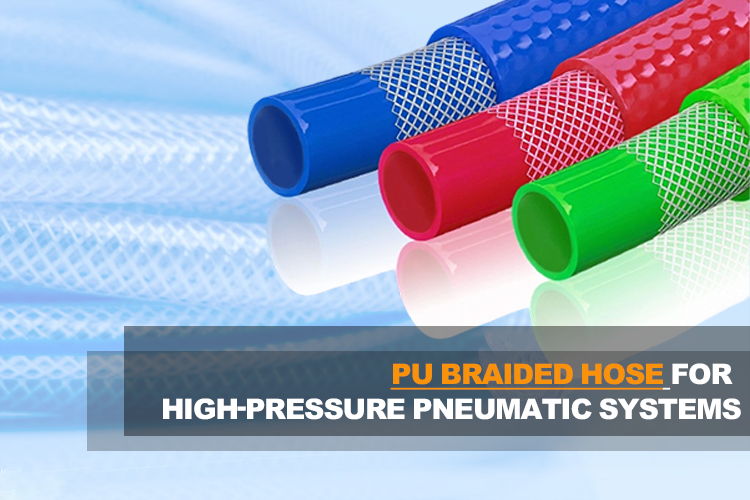
PU Braided Hose for High-Pressure Pneumatic Systems

Dec 10, 2025 Blog
How to Choose and Use Rapid Pneumatic Fittings
Dec 05, 2025 Blog
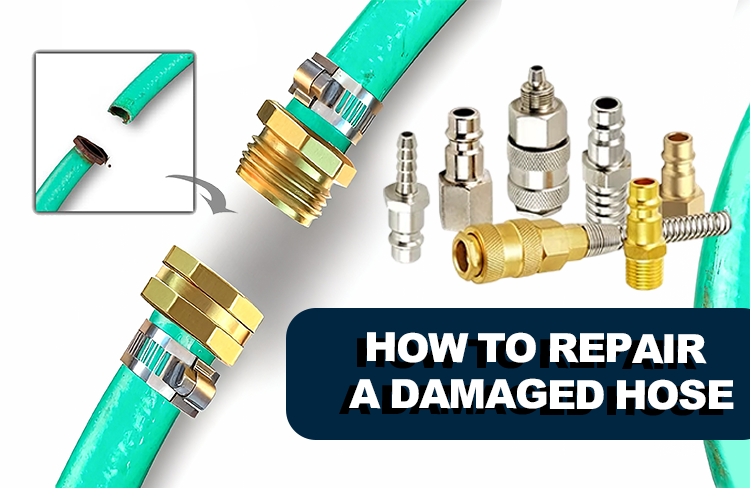
How to Repair a Damaged Hose Using a Hose Mender

Sep 24, 2025 Blog
Can polyurethane tubing be used for fuel lines?
Get a free sample

Links: www.fescolo.com(Pneumatic)
FOKCA ©1998-2025 All Rights Reserved Sitemap