Apr 01, 2026
In pneumatic systems, connector failure rarely comes from sudden breakage—it usually starts with sealing degradation or corrosion. When comparing brass vs stainless steel fittings, especially nickel plated brass fitting and Full Stainless Steel Pneumatic One Touch Fitting, the difference in lifespan becomes critical in humid, washdown, or food-grade environments. For distributors, engineers, and procurement teams, choosing the right material directly impacts maintenance cycles and system reliability.
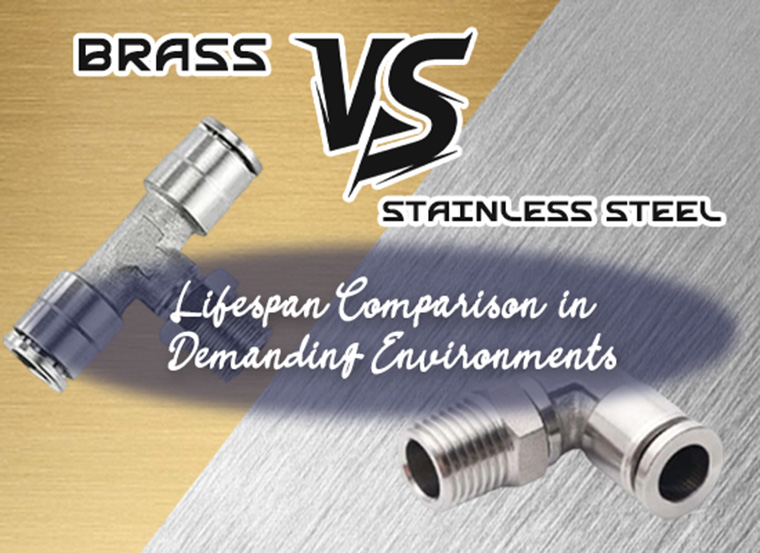
Sealing performance determines whether a fitting maintains pressure stability over time. In pneumatic connector comparison, brass fittings typically rely on elastomer seals that degrade faster under temperature fluctuation and moisture exposure. Over time, micro-cracks form, leading to leakage.
By contrast, stainless steel air fitting assemblies often pair with higher-grade sealing materials and exhibit better dimensional stability, reducing seal deformation. This becomes evident in continuous operation systems where downtime is costly.
In high-cycle automation lines, even minor leakage can lead to measurable efficiency loss.
Corrosion is rarely uniform; it often accelerates due to electrochemical reactions. Nickel plated brass fitting provides an initial protective layer, but once the nickel coating is compromised, the underlying brass becomes vulnerable—especially in chloride-rich or acidic environments.
Stainless steel fittings offer inherent corrosion resistance, not dependent on surface coatings. This makes them significantly more durable in washdown or outdoor applications.
| Property | Nickel Plated Brass Fitting | Stainless Steel Air Fitting |
|---|---|---|
| Surface Protection | Nickel coating | Passive oxide layer |
| Corrosion Resistance | Medium (coating dependent) | High (material intrinsic) |
| Failure Mode | Coating peel → corrosion | Gradual, predictable wear |
| Maintenance Frequency | Moderate to high | Low |
Data reference: general material performance benchmarks from industrial material studies and ISO corrosion classifications.
Humidity accelerates both seal degradation and corrosion. In compressed air systems with condensation, brass vs stainless steel fittings show clear divergence after prolonged use.
Nickel plated brass tends to develop internal oxidation, which may not be visible externally but affects airflow consistency. Meanwhile, stainless steel air fitting maintains structural integrity and airflow precision over extended periods.
This is particularly relevant in systems using
stainless steel pneumatic connectors
where reliability under moisture exposure is non-negotiable.
Food and beverage environments impose stricter requirements—not just corrosion resistance, but also hygiene compliance. Cleaning agents, high-pressure washdowns, and temperature shifts all stress fittings.
A packaging equipment manufacturer switched from
nickel plated brass fittings
to stainless steel alternatives after repeated failures during sanitation cycles.
The result:
1.Reduced replacement frequency by over 40%
2.Improved compliance with hygiene standards
3.Lower risk of contamination from material degradation
This aligns with common industry practices guided by organizations like ISO and EHEDG.
Despite the advantages, nickel plated brass fitting is not obsolete. It remains a cost-effective option for dry, controlled environments where exposure to moisture or chemicals is minimal.
Typical use cases include:
1.Indoor automation systems
2.Non-corrosive air supply lines
3.Cost-sensitive projects with moderate duty cycles
However, once conditions involve water, chemicals, or hygiene requirements, stainless steel becomes the more reliable investment.
Material selection should not be based on initial cost alone. A proper pneumatic connector comparison considers lifecycle cost, maintenance intervals, and operational risk.
For systems requiring durability and minimal downtime, integrating
high durability pneumatic fittings
made from stainless steel ensures long-term stability.
Choosing stainless steel is not just about corrosion resistance—it’s about predictable performance over time.
(FK9026)
 PVC Tubing vs Polyurethane Tubing: Choosing the Better Air Hose for Modern Pneumatic Systems
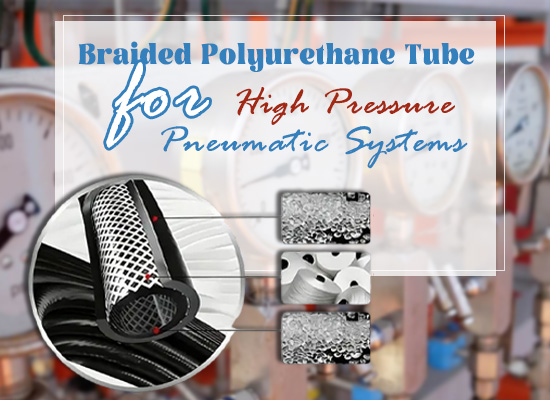 Braided Polyurethane Tube for High Pressure Pneumatic Systems
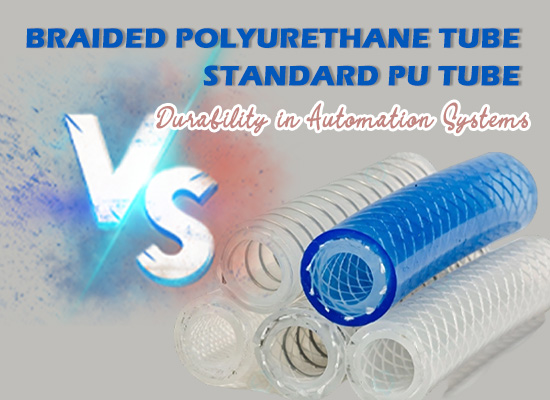 PUB Braided Polyurethane Tube vs Standard PU Tube: Durability in Automation Systems
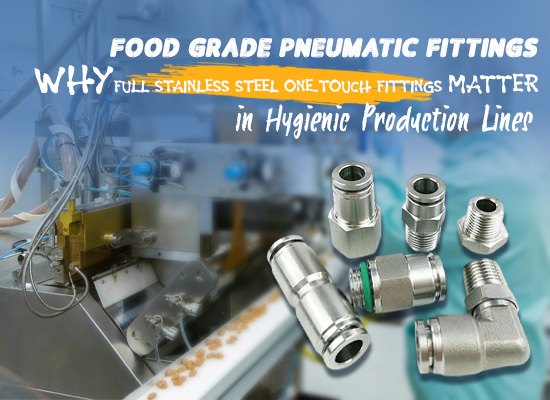 Food Grade Pneumatic Fittings: Why Full Stainless Steel One-Touch Fittings Matter in Hygienic Production Lines
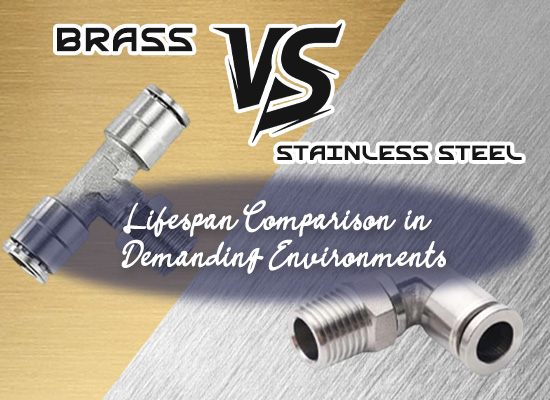 Brass vs Stainless Steel Fittings: Lifespan Comparison in Demanding Environments
You May Interest In
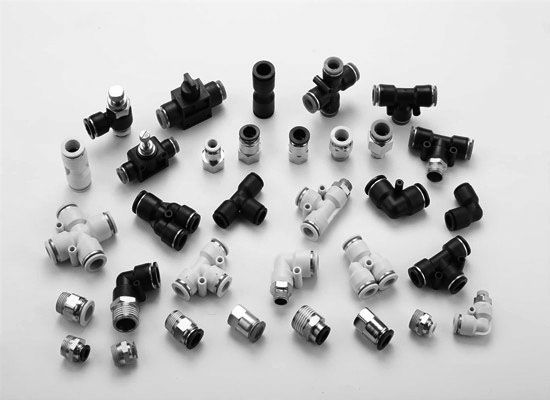
May 07, 2025 Blog
Comprehensive Analysis of Pneumatic Push in Fittings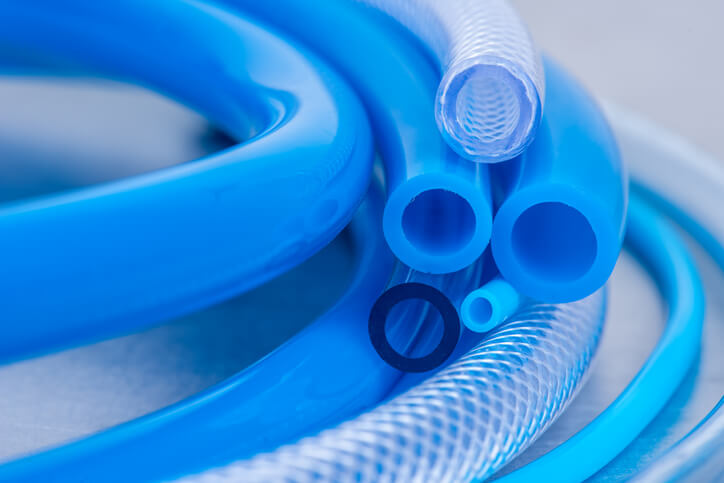
Apr 22, 2025 Blog
Solution for Nylon Tube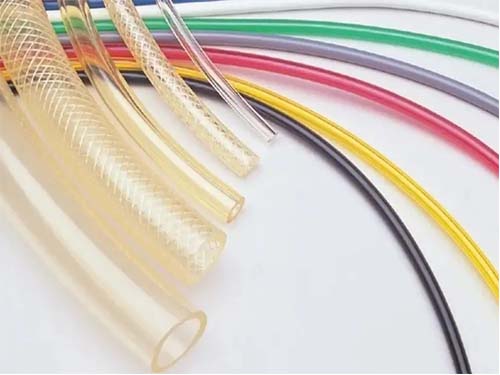
Apr 16, 2025 Blog
PVC Tubing vs. Polyurethane Tubing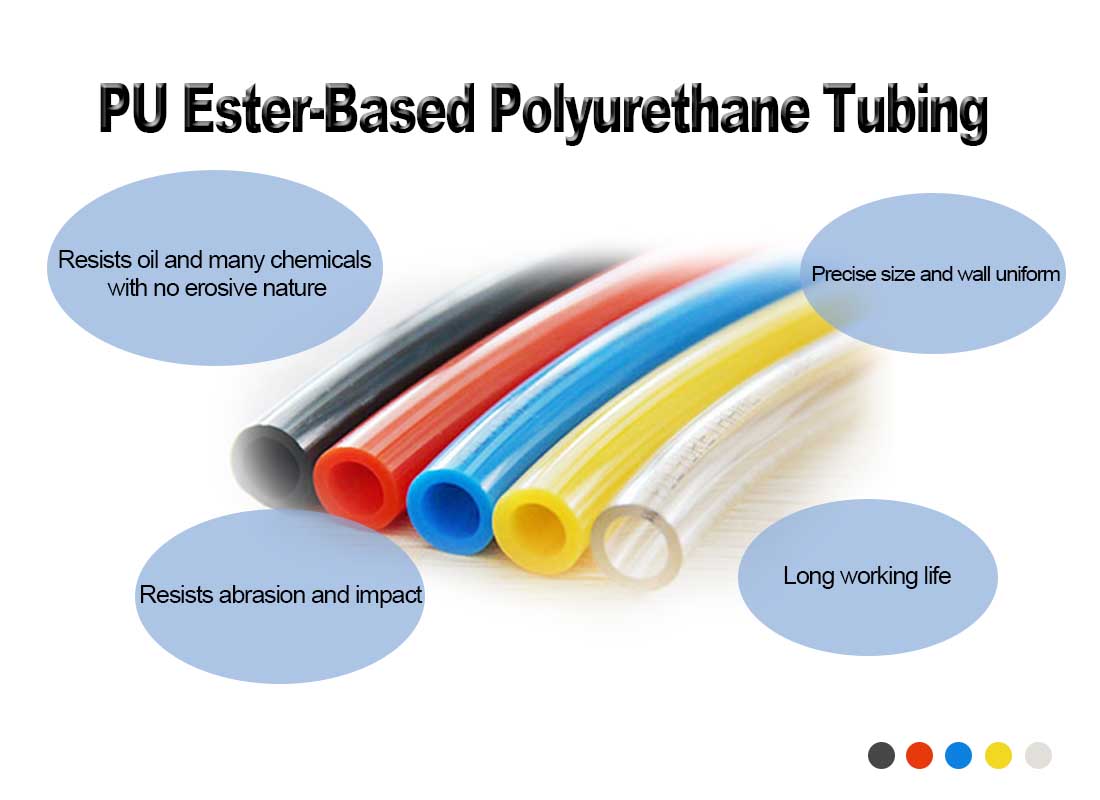
Apr 10, 2025 Blog
What is the difference between pu and pvc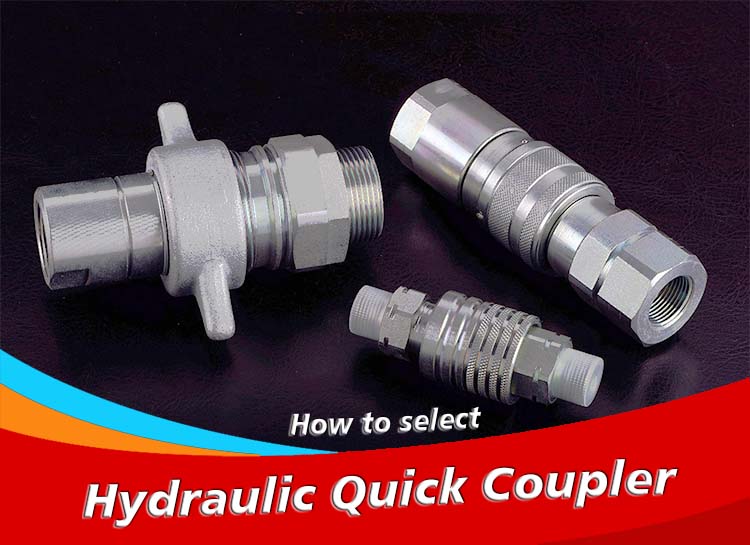
Feb 24, 2025 Blog
How to Identify Hydraulic Quick Couplers?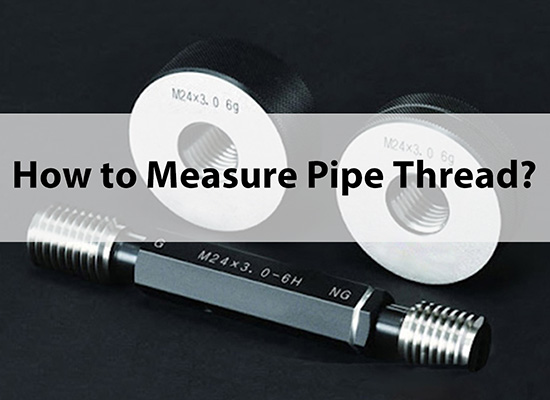
Jan 21, 2025 Blog
How to Measure Pipe Thread?
Jan 16, 2025 Blog
What Is Pipe thread?
Dec 04, 2024 Blog
Application Of Tube Fitting
Jun 26, 2023 Blog
What Is The Difference Between LLDPE And LDPE?
Jan 17, 2023 Blog
What Are The Classification Of Plastics?
Get a free sample

Links: www.fescolo.com(Pneumatic)
FOKCA ©1998-2025 All Rights Reserved Sitemap