Apr 23, 2026
In many mid-to-high pressure pneumatic systems, standard PU tubing often becomes a weak point. Under continuous load, it may expand, deform, or even rupture, especially in dynamic equipment. Braided Polyurethane Tube solves this limitation by integrating a fiber reinforcement layer within the PU structure, significantly improving pressure resistance and dimensional stability. For equipment engineers and procurement teams, understanding the difference between standard and reinforced polyurethane tubing is critical to long-term system reliability.
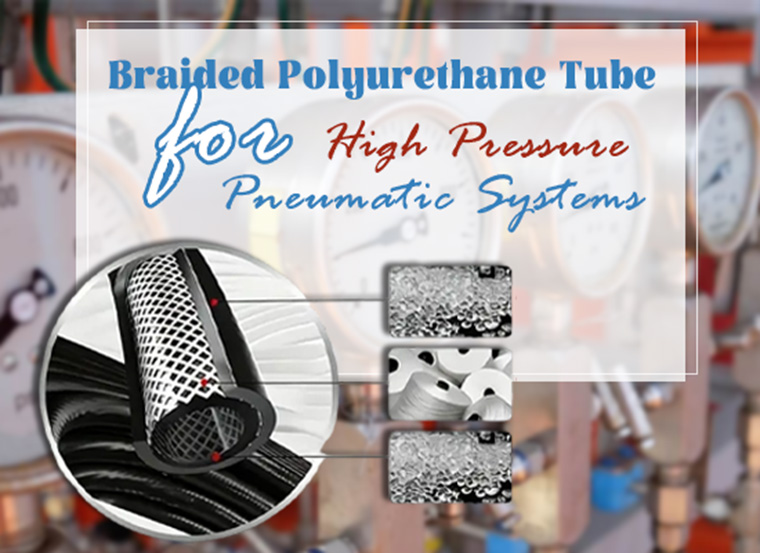
When pressure cycles increase, conventional PU hoses tend to exhibit radial expansion. This not only affects airflow stability but also accelerates material fatigue. In automated lines or pneumatic fixtures, such deformation leads to inconsistent actuator response.
The root cause lies in material structure. Standard PU tubing relies solely on polymer elasticity, which performs well under flexibility requirements but lacks structural reinforcement. As pressure rises above typical operating levels (e.g., >10 bar), the risk of burst increases sharply.
This is where braided PU hose becomes essential, especially in systems requiring stable pressure delivery over long periods.
Unlike standard tubing, Braided Polyurethane Tube incorporates a high-strength fiber mesh between inner and outer PU layers. This structure acts as a constraint, limiting expansion under pressure.
Key technical advantages include:
1.Higher burst pressure capacity (often 2–3× standard PU tubing)
2.Improved dimensional stability under continuous load
3.Reduced vibration and pressure fluctuation
4.Extended service life in dynamic applications
In practical terms, this means fewer unexpected failures and more predictable system behavior.
For applications such as automated clamping systems or conveying lines, high pressure polyurethane tubing ensures consistent actuator performance even under rapid cycling.
In real-world engineering decisions, comparison data helps clarify value. Below is a simplified comparison based on typical industry benchmarks:
| Parameter | Standard PU Tubing | Reinforced Polyurethane Tubing |
|---|---|---|
| Working Pressure | Medium (6–10 bar) | High (10–25 bar) |
| Burst Resistance | Moderate | High (2–3× stronger) |
| Expansion Under Load | Noticeable | Minimal |
| Service Life | Medium | Extended |
| Suitable Applications | General air lines | High-pressure systems, automation |
Data based on general industry application benchmarks
This comparison highlights why PU air hose reinforced designs are increasingly preferred in demanding environments.
As automation systems become faster and more compact, tubing performance directly impacts efficiency. In high-frequency pneumatic circuits, pressure stability determines actuator precision.
For example, in pneumatic gripping systems, even slight tubing expansion can delay response time. By switching to polyurethane air line tubing with reinforcement, engineers can maintain consistent gripping force and timing.
Typical applications include:
1.Automated material conveying systems
2.Pneumatic clamping and fixture units
3.High-cycle packaging machinery
4.Vehicle modification systems such as lift platforms
Choosing the correct tubing involves more than just pressure rating. Engineers should consider:
· Peak vs continuous working pressure
· Installation space and bending radius
· Temperature conditions
· Compatibility with fittings and valves
A properly selected braided PU hose not only prevents failures but also improves overall system efficiency. In many cases, upgrading tubing is a simple yet highly effective way to enhance performance without redesigning the entire system.
(FK9026)
 PVC Tubing vs Polyurethane Tubing: Choosing the Better Air Hose for Modern Pneumatic Systems
 Braided Polyurethane Tube for High Pressure Pneumatic Systems
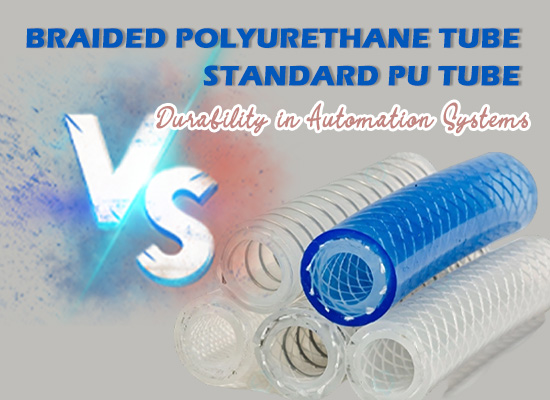 PUB Braided Polyurethane Tube vs Standard PU Tube: Durability in Automation Systems
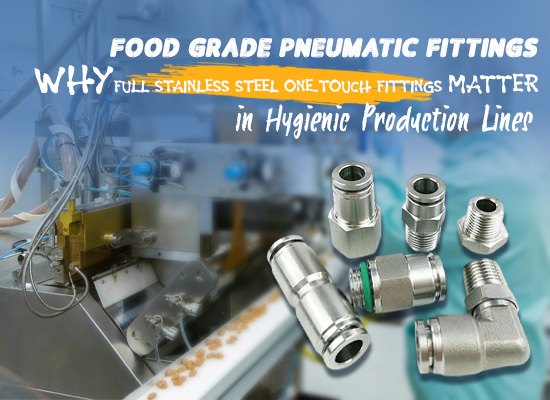 Food Grade Pneumatic Fittings: Why Full Stainless Steel One-Touch Fittings Matter in Hygienic Production Lines
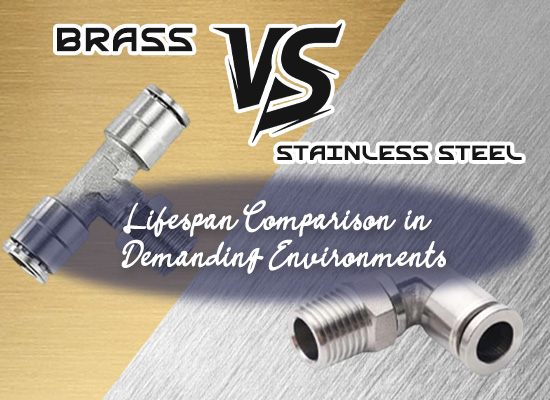 Brass vs Stainless Steel Fittings: Lifespan Comparison in Demanding Environments
You May Interest In
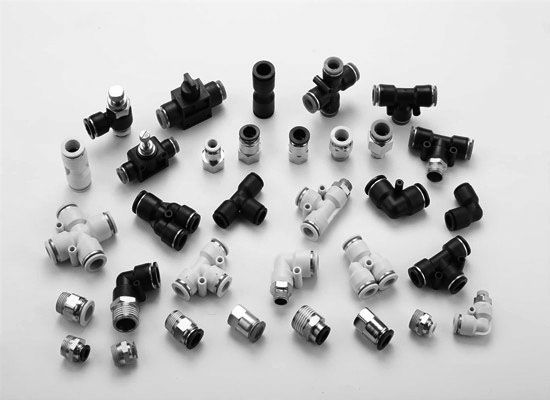
May 07, 2025 Blog
Comprehensive Analysis of Pneumatic Push in Fittings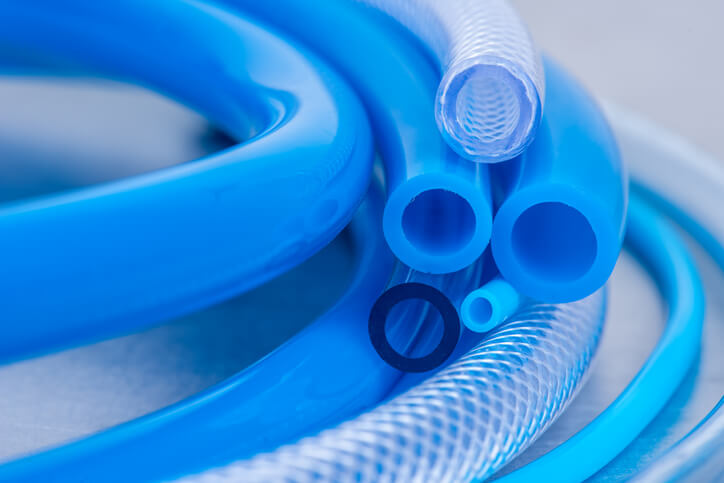
Apr 22, 2025 Blog
Solution for Nylon Tube
Apr 16, 2025 Blog
PVC Tubing vs. Polyurethane Tubing
Apr 10, 2025 Blog
What is the difference between pu and pvc
Feb 24, 2025 Blog
How to Identify Hydraulic Quick Couplers?
Jan 21, 2025 Blog
How to Measure Pipe Thread?
Jan 16, 2025 Blog
What Is Pipe thread?
Dec 04, 2024 Blog
Application Of Tube Fitting
Jun 26, 2023 Blog
What Is The Difference Between LLDPE And LDPE?
Jan 17, 2023 Blog
What Are The Classification Of Plastics?
Get a free sample

Links: www.fescolo.com(Pneumatic)
FOKCA ©1998-2025 All Rights Reserved Sitemap