Dec 15, 2025
When selecting pneumatic tubing, surface smoothness plays a critical role in ensuring efficient airflow, minimizing friction, and extending the lifespan of the system. Materials such as PTFE,PE, PU, PP, PVC, and PA each offer distinct characteristics, making them suitable for specific applications. Understanding these differences helps distributors, engineers, and procurement managers make informed decisions for industrial and automation systems.
Surface smoothness refers to the microscopic texture of a tubing material’s inner wall. A smoother surface reduces friction, improving fluid or gas flow efficiency and decreasing pressure loss. It also enhances the performance of seals and fittings, reducing wear and leakage risks over time. For applications requiring precise motion control, such as in laboratory or electronic assembly lines, the surface finish of pneumatic tubes is as crucial as their mechanical strength.
Key factors influenced by surface smoothness:
◆Friction coefficient: Lower values result in smoother gas or fluid flow.
◆Durability: Smooth surfaces reduce wear on fittings and internal components.
◆Precision: Critical for automated systems where rapid, accurate motion is required.
PTFE, commonly known as Teflon, is renowned for its exceptionally low friction coefficient, making it the smoothest among commonly used solid materials. This low friction allows for precise airflow and minimal resistance, ideal for high-speed pneumatic operations and sensitive instrumentation.
Applications requiring high surface smoothness:
◆Laboratory gas distribution
◆High-speed automated assembly lines
◆Precision pneumatic actuators
FOKCA’s PTFE pneumatic tubing combines chemical resistance, high-temperature tolerance, and unmatched smoothness, making it suitable for demanding industrial applications. Its low friction ensures stable operation even in complex or compact piping networks.
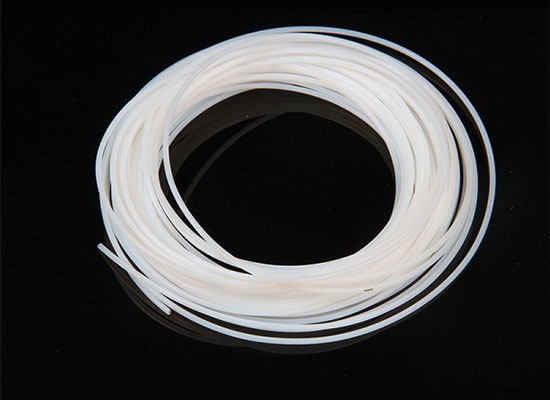
Polyethylene (PE) and Polypropylene (PP) provide moderately smooth surfaces at a lower cost compared to PTFE. While their friction coefficients are slightly higher, they remain suitable for most industrial pneumatic applications, especially where cost efficiency is important.
Typical applications:
◆General pneumatic lines in automated equipment
◆Medium-pressure pneumatic systems
◆Packaging and material handling lines
Material | Friction Coefficient | Typical Pressure | Surface Smoothness | Application |
PTFE | 0.05–0.10 | High | Extremely smooth | Precision control |
PE | 0.20–0.25 | Medium | Smooth | General pneumatic lines |
PP | 0.20–0.25 | Medium | Smooth | Automation equipment |
FOKCA provides custom lengths and diameters for PE and PP tubing, ensuring flexibility for OEM and industrial projects.
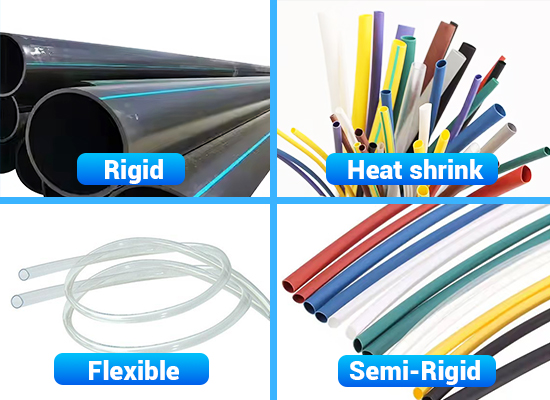
Polyurethane (PU) tubing combines moderate smoothness with high flexibility and wear resistance. It is particularly suitable for applications where frequent bending or movement occurs, such as robotic arms or moving machinery components.
Applications:
◆Flexible pneumatic connections in robotics
◆Automated production lines with complex layouts
◆Systems requiring vibration damping
FOKCA’s PU tubing offers excellent abrasion resistance, maintaining consistent performance in high-cycle industrial environments. Its surface smoothness ensures reliable airflow without compromising flexibility.

PVC tubing provides an affordable solution with moderate surface smoothness and strong chemical resistance. While not as low-friction as PTFE, it is ideal for general-purpose pneumatic systems, especially in environments where chemical exposure is a concern.
Applications:
◆Standard pneumatic lines in factories
◆Pneumatic actuators with medium pressure
◆Chemical handling equipment
Property | PVC | Notes |
Surface Smoothness | Moderate | Suitable for general airflow |
Chemical Resistance | High | Can handle acids, bases |
Cost | Low | Economical for large-scale deployment |
FOKCA’s PVC pneumatic tubing ensures durable performance with smooth internal surfaces, making it a reliable choice for cost-sensitive industrial setups.
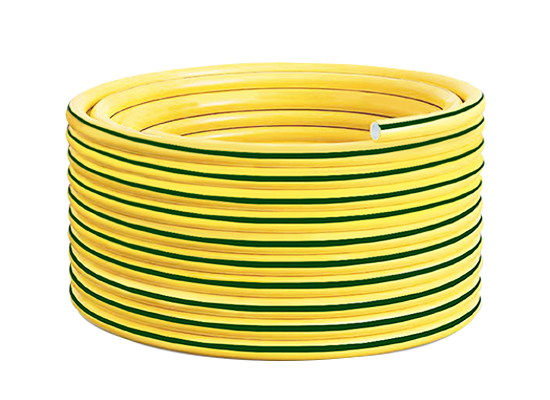
PA (Nylon) tubing offers a balance of smoothness, strength, and wear resistance, suitable for mechanical and automation systems. Its moderate friction and high durability make it ideal for long-term pneumatic operations.
Applications:
◆High-pressure pneumatic circuits
◆Equipment with frequent movement or vibration
◆Mechanical systems requiring wear-resistant tubing
FOKCA’s PA tubing is engineered for high reliability, ensuring consistent airflow and minimal maintenance even under demanding operational conditions.
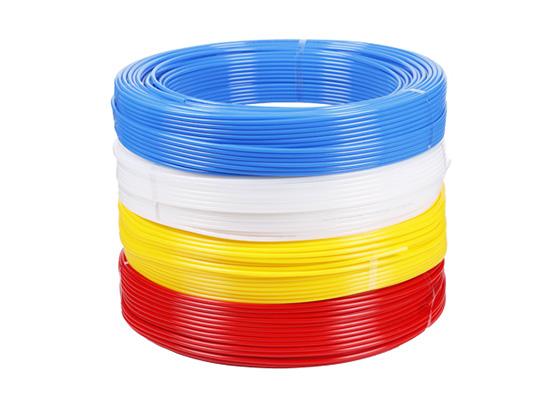
Selecting the optimal tubing material depends on surface smoothness requirements, chemical compatibility, flexibility, and operating pressure.
Material | Surface Smoothness | Flexibility | Chemical Resistance | Recommended Use |
PTFE | Extremely smooth | Low | Excellent | Precision control, high-speed lines |
PE | Smooth | Medium | Good | Cost-effective pneumatic lines |
PP | Smooth | Medium | Good | General automation |
PU | Moderate | High | Good | Flexible, high-cycle systems |
PVC | Moderate | Medium | High | General industrial, chemical environments |
PA | Moderate | Medium | Good | Mechanical systems, high-pressure lines |
Tips for application:
◆High surface smoothness → low friction → precise control
◆High flexibility → frequent bending or vibration
◆Chemical resistance → exposure to solvents or corrosive gases
FOKCA offers customized pneumatic tubing solutions in all these materials, along with OEM/ODM services, ensuring the right material and size for your specific application. By selecting the appropriate tubing, businesses can improve efficiency, reduce maintenance costs, and enhance system reliability.
By understanding the surface smoothness properties of PTFE, PE, PU, PP, PVC, and PA, engineers and procurement managers can optimize pneumatic systems for performance, durability, and cost. FOKCA’s wide range of high-quality pneumatic tubing ensures that every industrial application—from precision instrumentation to flexible automation—can achieve the optimal balance between smooth airflow and operational reliability.
For more information on pneumatic tubings , please do not hesitate to Contact us.
(FK9026)
 PVC Tubing vs Polyurethane Tubing: Choosing the Better Air Hose for Modern Pneumatic Systems
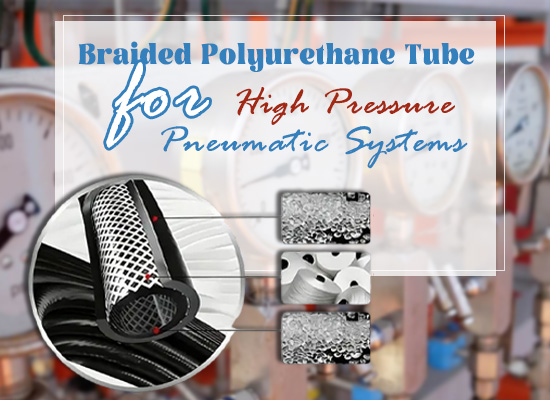 Braided Polyurethane Tube for High Pressure Pneumatic Systems
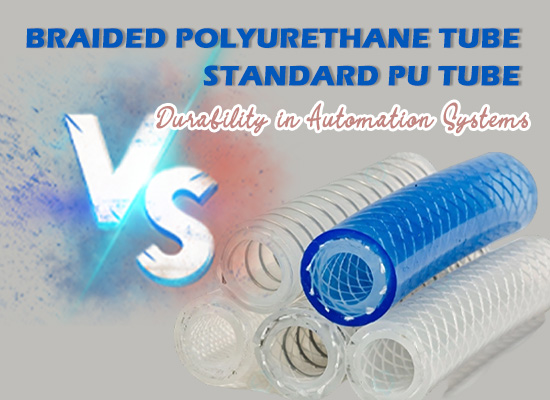 PUB Braided Polyurethane Tube vs Standard PU Tube: Durability in Automation Systems
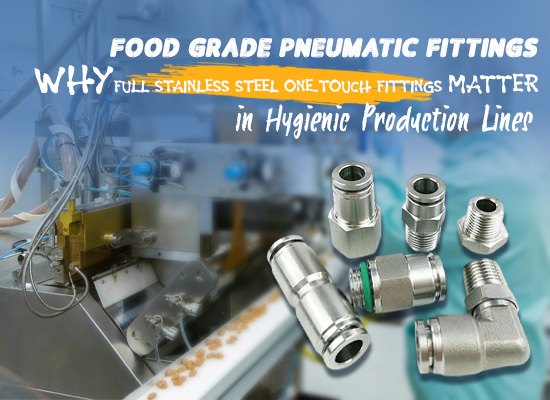 Food Grade Pneumatic Fittings: Why Full Stainless Steel One-Touch Fittings Matter in Hygienic Production Lines
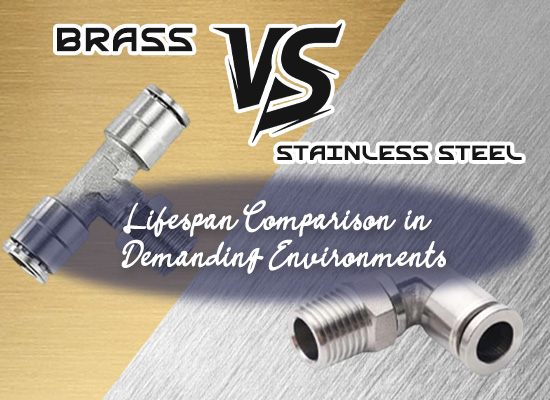 Brass vs Stainless Steel Fittings: Lifespan Comparison in Demanding Environments
You May Interest In
Dec 10, 2025 Blog
How to Choose and Use Rapid Pneumatic Fittings

Get a free sample

Links: www.fescolo.com(Pneumatic)
FOKCA ©1998-2025 All Rights Reserved Sitemap