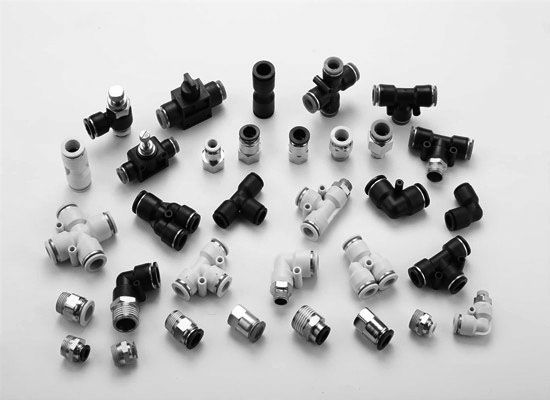
In food processing environments, compressed air systems are no longer just utility lines—they directly impact product safety. Food grade pneumatic fittings must meet strict hygiene, corrosion resistance, and cleaning standards. When conventional brass or plastic connectors are used, hidden risks often emerge under high washdown frequency and chemical exposure, making Full Stainless Steel Pneumatic One Touch Fitting solutions a practical necessity rather than an upgrade.
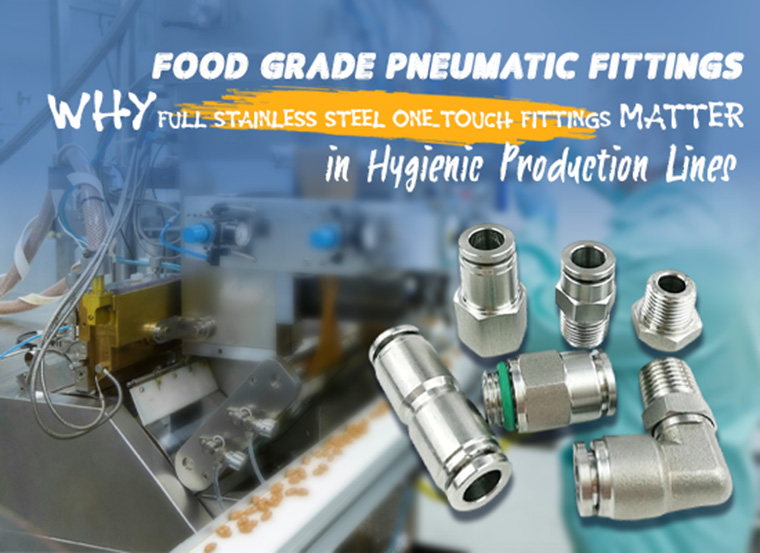
Hygiene Standards and Hygienic Pneumatic Components Compliance
Food and beverage production follows strict frameworks such as FDA and EHEDG guidelines, where every surface in contact or proximity must be easy to clean and non-contaminating. Traditional fittings often include mixed materials and micro-gaps, which can trap residues.
By contrast, hygienic pneumatic components made from stainless steel provide:
1.Smooth, non-porous surfaces
2.Reduced bacterial adhesion risk
3.Compatibility with clean-in-place (CIP) systems
This is why many OEMs now prioritize stainless steel across entire air circuits, especially in filling and packaging zones.
Cleaning Frequency: The Hidden Stress on Standard Fittings
Daily washdowns using hot water and detergents create repeated thermal and chemical stress. Over time, standard fittings degrade in subtle but critical ways—seals harden, threads loosen, and micro-leaks appear.
A comparison highlights the difference:
| Property | Standard Fittings | Stainless Steel Air Fittings |
|---|
| Washdown Resistance | Moderate | High |
| Thermal Stability | Limited | Excellent |
| Seal Longevity | 3–6 months (avg) | 12+ months |
| Surface Hygiene | Medium | High |
Source: Industry maintenance data from food processing equipment reports
In high-frequency cleaning environments, stainless steel air fittings maintain structural integrity far longer, reducing maintenance cycles.
Corrosive Environments and Material Failure Risks
Food factories often involve acidic liquids, salt exposure, and aggressive cleaning agents. Brass fittings may dezincify, while plastic components can crack or swell.
This leads to three common failures:
1.Internal corrosion causing airflow restriction
2.External surface degradation leading to contamination risks
3.Seal incompatibility with cleaning chemicals
Using food grade pneumatic fittings in stainless steel (typically 304 or 316) eliminates these issues through superior corrosion resistance and chemical stability.
Full Stainless Steel Pneumatic One Touch Fitting in Practice
Ease of installation remains critical in modern production lines. While metal fittings were traditionally threaded and time-consuming, the evolution of Full Stainless Steel Pneumatic One Touch Fitting designs combines hygiene with efficiency.
Key advantages include:
1.Tool-free installation and removal
2.Leak-proof sealing under vibration
3.Consistent performance in wet environments
For example, in a beverage bottling line, switching to one-touch stainless fittings reduced maintenance downtime by nearly 20%, primarily due to faster replacement and fewer leak points.
Selection Considerations for Engineers and Buyers
Choosing the right fitting involves more than material selection. Engineers and procurement teams should evaluate:
1.Pressure rating and airflow requirements
2.Tube compatibility (PU, PTFE, etc.)
3.Certification requirements (FDA, ISO-related compliance)
For systems requiring frequent sanitation, selecting stainless steel air fittings with integrated sealing reliability ensures long-term stability.
Integrated System Reliability Starts from Small Components
Even though fittings are small components, they directly influence system uptime and product safety. A single failure point in a compressed air line can halt an entire production batch.
In modern food-grade systems, the shift toward hygienic pneumatic components reflects a broader trend: reducing risk through material consistency and smarter design.
In food-grade production, durability is not just about lifespan—it is about maintaining hygiene under constant stress. Choosing food grade pneumatic fittings made entirely from stainless steel ensures that every connection point supports both operational efficiency and compliance, without compromise.
(FK9026)

 PVC Tubing vs Polyurethane Tubing: Choosing the Better Air Hose for Modern Pneumatic Systems
 Braided Polyurethane Tube for High Pressure Pneumatic Systems
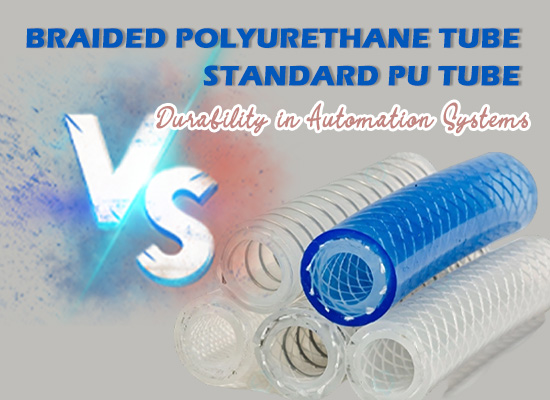 PUB Braided Polyurethane Tube vs Standard PU Tube: Durability in Automation Systems
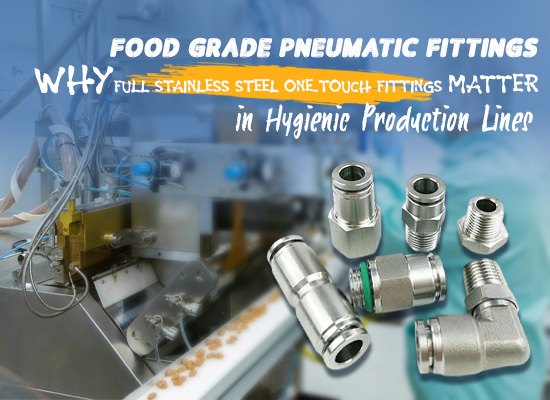 Food Grade Pneumatic Fittings: Why Full Stainless Steel One-Touch Fittings Matter in Hygienic Production Lines
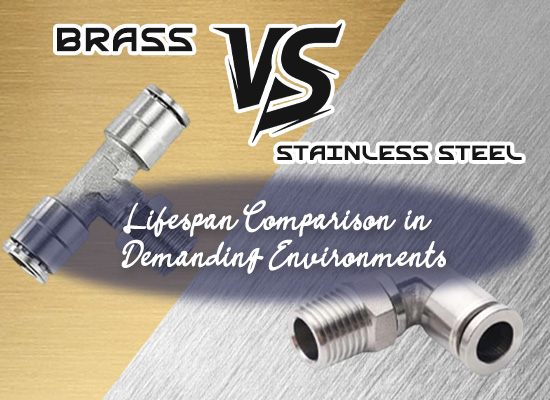 Brass vs Stainless Steel Fittings: Lifespan Comparison in Demanding Environments