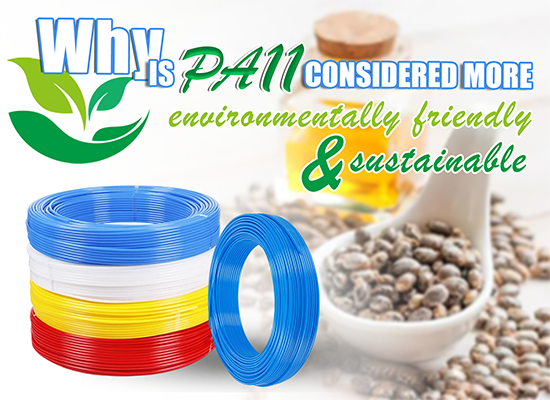
Sustainability is no longer just a branding topic in industrial automation. For distributors, equipment engineers, and purchasing managers, material choice directly affects compliance, lifecycle cost, and long-term supply risk. PA11 Nylon Tube, also known as Nylon 11 tubing, is increasingly discussed as a more sustainable alternative to traditional nylon hose materials, especially in pneumatic and fluid transfer systems. Its environmental profile comes from its origin—not from performance compromises—and understanding both its strengths and limitations helps buyers make informed decisions.
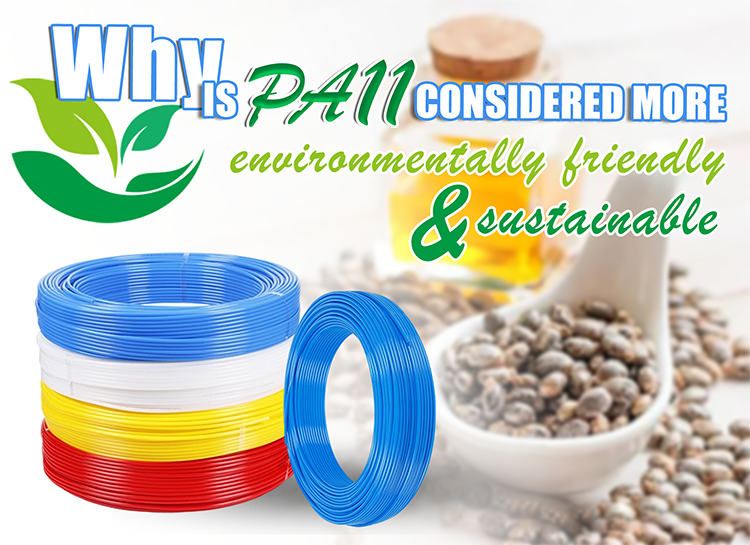
Why PA11 Nylon Tube Is Considered More Sustainable
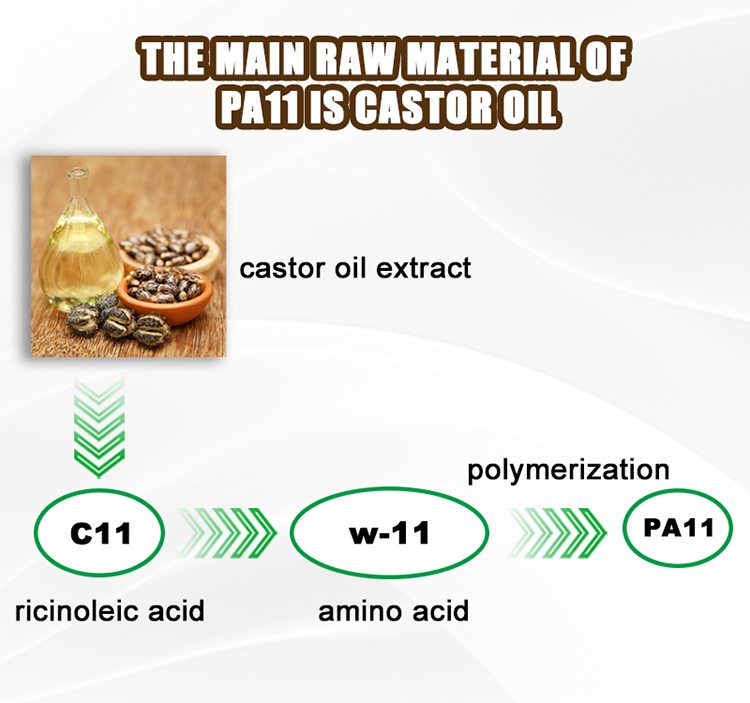
The defining difference between PA11 Nylon Tube and conventional nylon tubing lies in its raw material source. Nylon 11 is derived from castor oil, a renewable plant-based resource, while most traditional nylon tubing (such as PA6 or PA12) is produced from petroleum-based feedstocks. This means PA11 replaces fossil carbon with renewable plant carbon, reducing dependence on non-renewable resources at the material level.
Castor plants are particularly suitable for sustainable industrial supply chains.
They grow in arid climates, require limited irrigation, and thrive on marginal land. Most importantly, castor cultivation does not compete with food crops or high-value agricultural land, which addresses a common concern surrounding bio-based materials.
PA11 Nylon Tubing vs Petroleum-Based Nylon Tubing
From a technical perspective, PA11 nylon tubing performs similarly to conventional nylon hose in many pneumatic applications. However, the environmental distinction becomes clearer when comparing material origin and lifecycle impact.
| Property | PA11 Nylon Tube | Conventional Nylon Tubing |
|---|
| Raw material source | Castor oil (renewable) | Petroleum (fossil-based) |
| Carbon origin | Plant-based carbon | Fossil carbon |
| Land use impact | Grown on marginal land | Not applicable |
| Biodegradable | No | No |
| Typical cost level | Higher | Lower |
Data based on material supplier disclosures and polymer industry analysis.
This comparison highlights an important point: PA11 nylon tubing is not biodegradable, but it is bio-based. These two concepts are often confused in procurement discussions.
Common Misconception: Bio-Based Does Not Mean Biodegradable
A frequent misunderstanding among end users is comparing PA11 Nylon Tube to materials like PLA. Unlike PLA, which is designed for biodegradability under specific conditions, Nylon 11 is engineered for durability and chemical resistance, not environmental breakdown. It does not degrade naturally in soil or water.
For pneumatic systems, this is usually an advantage. Industrial nylon hose is expected to last years under pressure, vibration, and exposure to oils or compressed air. In this context, durability and sustainability are addressed at the resource level rather than end-of-life decomposition.
Performance Characteristics in Pneumatic Applications
From an engineering standpoint, PA11 nylon tubing offers stable mechanical properties across a wide temperature range and good resistance to chemicals, oils, and fuels. This makes it suitable for automation equipment, air control systems, and fluid transfer lines where reliability is critical.
Distributors often position nylon hose made from PA11 as a premium option for customers seeking lower environmental impact without redesigning existing systems. Compatibility with standard pneumatic fittings and push-in connectors further simplifies adoption. In many cases, switching materials does not require system modification.
Cost Considerations and Purchasing Strategy
One practical limitation remains: PA11 Nylon Tube is significantly more expensive than standard nylon tubing. The higher cost is driven by agricultural sourcing, processing complexity, and smaller production volumes compared to petroleum-based polymers.
For purchasing managers, this often leads to selective use rather than full replacement. PA11 nylon tubing is commonly specified for export equipment, environmentally regulated markets, or high-value machinery, while standard nylon hose remains dominant in cost-sensitive applications.
When PA11 Nylon Tubing Makes Sense
Choosing PA11 Nylon Tube is less about marketing claims and more about alignment with customer values, regulations, and product positioning. For OEMs and distributors serving markets with sustainability reporting requirements, bio-based nylon tubing supports long-term compliance and brand credibility.
By understanding both the advantages and trade-offs, engineers and buyers can specify materials that meet technical demands while supporting a more sustainable industrial supply chain.
(FK9026)

 PVC Tubing vs Polyurethane Tubing: Choosing the Better Air Hose for Modern Pneumatic Systems
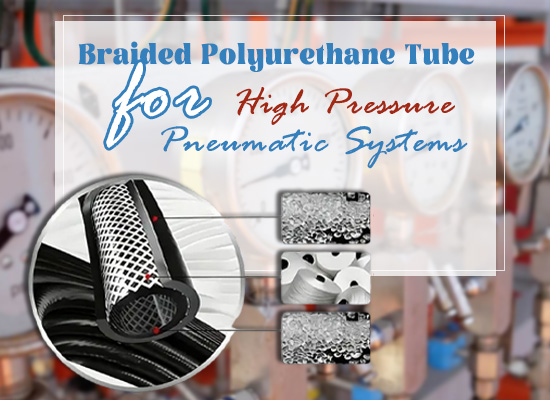 Braided Polyurethane Tube for High Pressure Pneumatic Systems
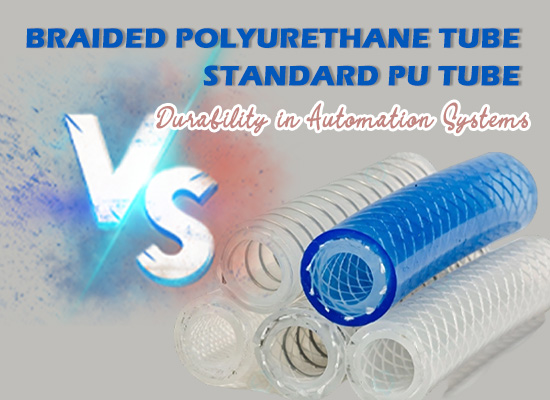 PUB Braided Polyurethane Tube vs Standard PU Tube: Durability in Automation Systems
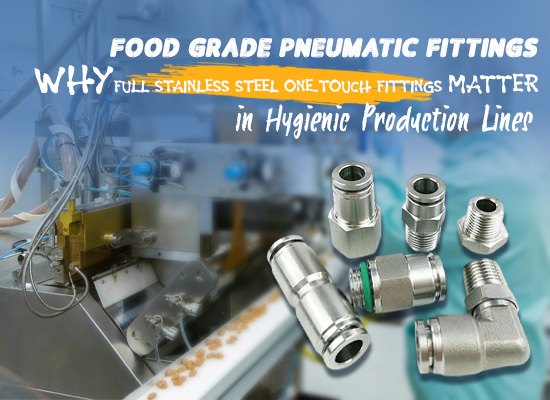 Food Grade Pneumatic Fittings: Why Full Stainless Steel One-Touch Fittings Matter in Hygienic Production Lines
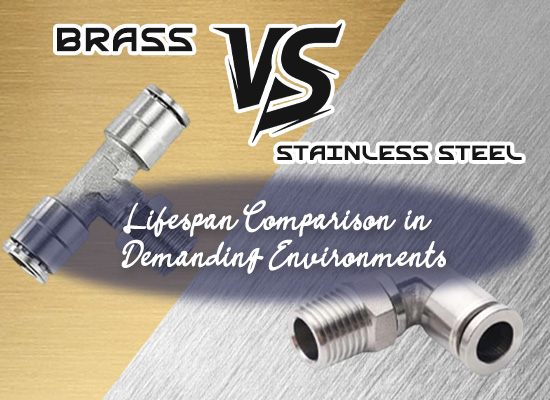 Brass vs Stainless Steel Fittings: Lifespan Comparison in Demanding Environments