Feb 10, 2026
PVC Flexible Tubing is widely used for conveying air, water, and light chemicals, yet many users discover its limitation when the line operates under negative pressure. In vacuum conditions, external atmospheric force can exceed the structural strength of ordinary Polyvinyl Chloride Tubing, leading to flattening, unstable flow, and even permanent deformation. Understanding why this happens and how reinforced designs solve the problem helps distributors, engineers, and purchasing teams choose the right hose instead of replacing failed lines again and again.
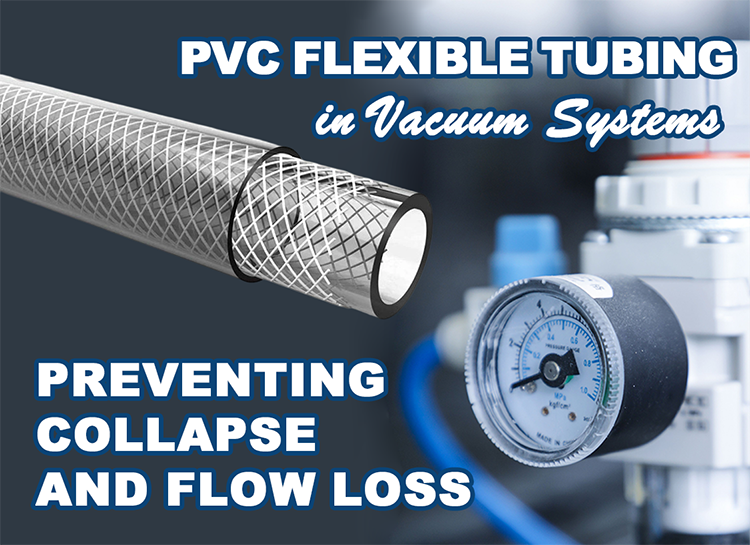
A flexible PVC tube is designed mainly for internal pressure. When the pressure inside drops below atmospheric level, the force direction reverses and the tube wall must resist compression rather than expansion. Standard soft PVC has high elasticity but limited ring stiffness, so the cross-section gradually turns from round to oval and finally flat. Long unsupported spans, high temperature, and large diameter accelerate this effect. Many maintenance teams assume the issue is material quality, but the real reason is structural design rather than the PVC compound itself.
Increasing wall thickness is the simplest method to improve resistance, yet it adds weight and reduces flexibility. For small diameters this may work, but in 12–25 mm lines the tube becomes hard to route and still may collapse at –0.06 to –0.08 MPa. A more effective approach is to use a PVC Hose with Fiber Reinforcement. The braided layer forms a skeleton that keeps the circular profile stable while maintaining the soft outer surface required for tight installation spaces. This balance is why most vacuum conveying equipment has shifted from plain tubing to reinforced structures.
In a Fiber-Braided PVC Hose, polyester yarn is embedded between inner and outer PVC layers. The braid converts external compression into tensile stress along the fibers, which they resist very well. Even when the inner PVC becomes soft at 50–60 °C, the braid continues to support the shape. Field tests on packaging machines show that reinforced hose can remain fully open at –0.09 MPa where unreinforced tubing collapses within minutes. The design also reduces micro-kinking near fittings, a common cause of flow fluctuation in vacuum pick-and-place systems.
Choosing only by diameter is risky. The table below gives practical guidance used by many equipment builders.
| Application condition | Recommended type | Typical vacuum limit | Notes |
|---|---|---|---|
| Short line <1 m, small bore ≤8 mm | Thick wall PVC tubing | –0.05 MPa | Use close supports |
| General equipment lines | PVC Fiber Reinforced Hose | –0.09 MPa | Best cost-performance |
| High temperature >60 °C | Reinforced hose + heat sleeve | –0.08 MPa | Avoid softening |
| Dynamic movement | PU or spiral hose | –0.06 MPa | Better fatigue life |
Engineers can also check the ratio of wall thickness to diameter; values below 0.12 usually require reinforcement. More selection details are available in our guide to pneumatic tubing at /pneumatic-tubing.
Even the best hose can fail if installed incorrectly. Keep spans as short as possible and add clips near bends. Sharp elbows concentrate external pressure; using large-radius fittings from /vacuum-fittings helps maintain shape. When connecting to barbed connectors, avoid over-tight clamps that cut into the outer layer of PVC Flexible Tubing. In cold environments, allow the hose to warm before assembly so the braid can seat evenly. These simple steps often double service life without changing material.
For extreme vacuum below –0.095 MPa or continuous motion, consider PU, nylon, or spring-wire hoses. However, for most industrial automation, dust collection, and light suction tasks, a properly specified PVC Hose with Fiber Reinforcement remains the most economical choice. It offers chemical compatibility, transparency for visual inspection, and easy replacement across global markets.
Selecting the correct structure turns vacuum from a problem into a reliable working condition. By understanding the deformation mechanism and using reinforced designs, users gain stable flow, longer maintenance intervals, and safer equipment operation without sacrificing the flexibility that makes PVC so practical.
(FK9026)
 PVC Tubing vs Polyurethane Tubing: Choosing the Better Air Hose for Modern Pneumatic Systems
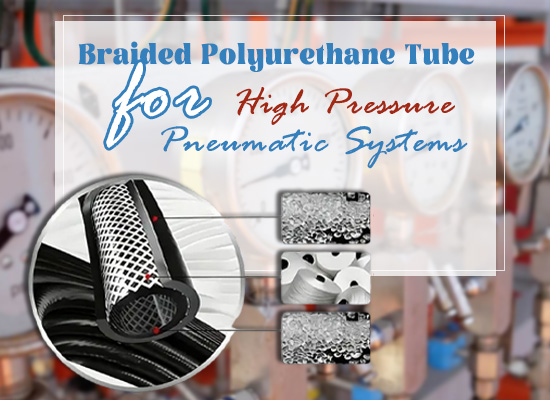 Braided Polyurethane Tube for High Pressure Pneumatic Systems
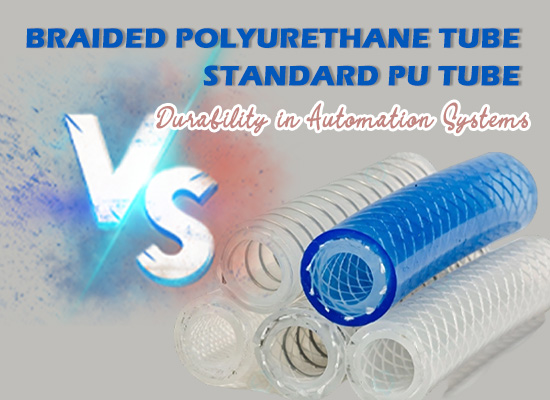 PUB Braided Polyurethane Tube vs Standard PU Tube: Durability in Automation Systems
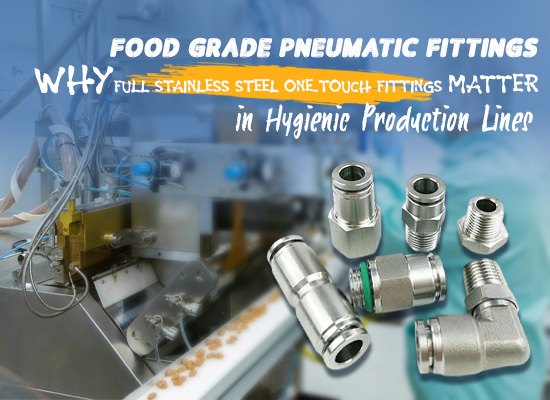 Food Grade Pneumatic Fittings: Why Full Stainless Steel One-Touch Fittings Matter in Hygienic Production Lines
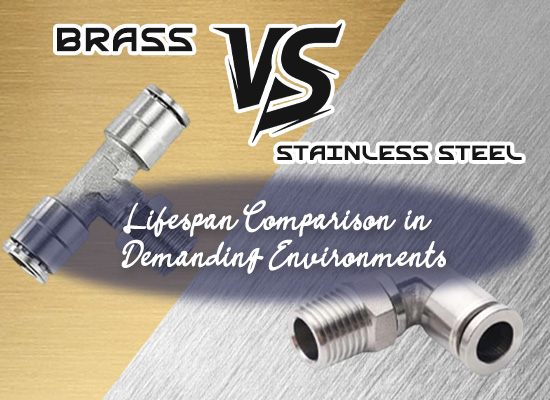 Brass vs Stainless Steel Fittings: Lifespan Comparison in Demanding Environments
You May Interest In
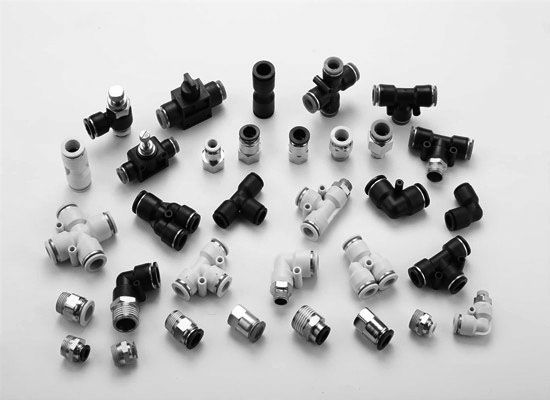
May 07, 2025 Blog
Comprehensive Analysis of Pneumatic Push in Fittings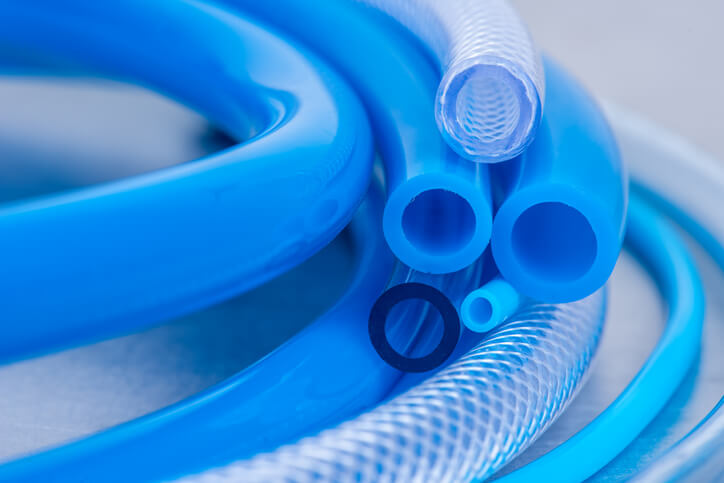
Apr 22, 2025 Blog
Solution for Nylon Tube
Apr 16, 2025 Blog
PVC Tubing vs. Polyurethane Tubing
Apr 10, 2025 Blog
What is the difference between pu and pvc
Feb 24, 2025 Blog
How to Identify Hydraulic Quick Couplers?
Jan 21, 2025 Blog
How to Measure Pipe Thread?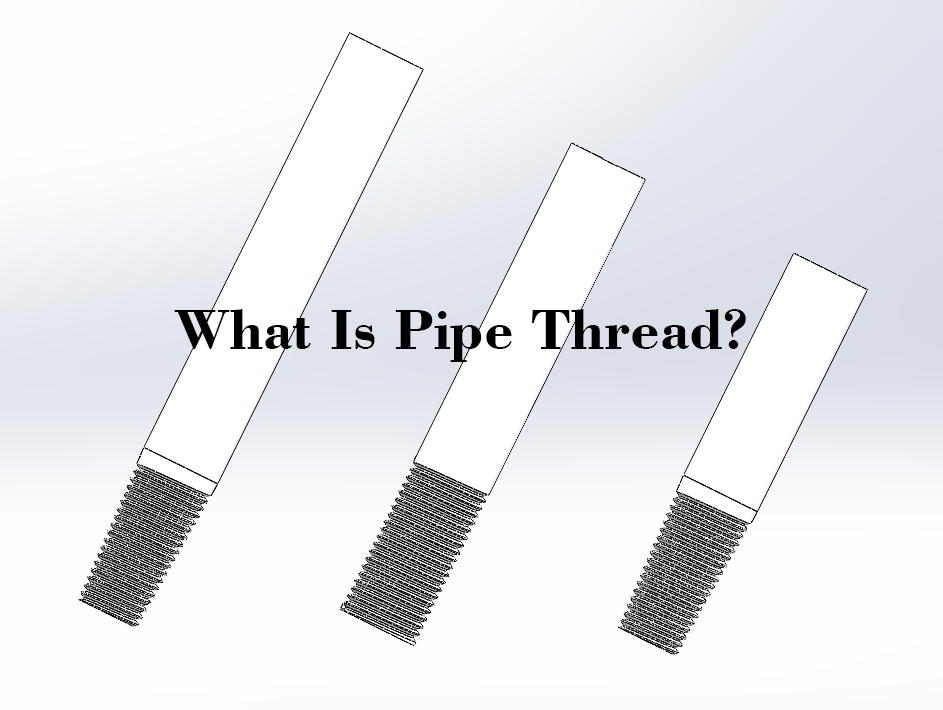
Jan 16, 2025 Blog
What Is Pipe thread?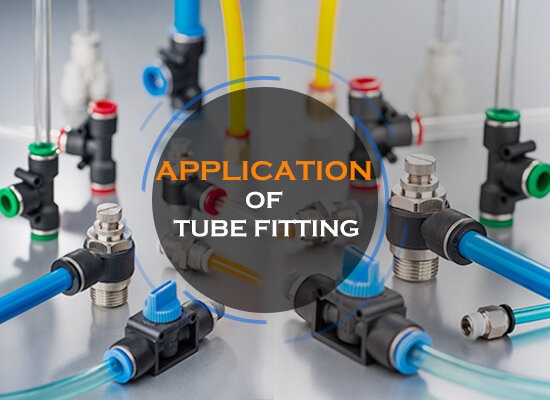
Dec 04, 2024 Blog
Application Of Tube Fitting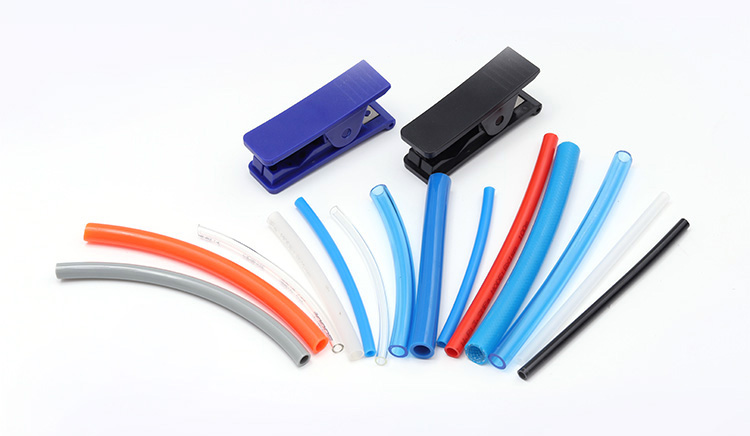
Jun 26, 2023 Blog
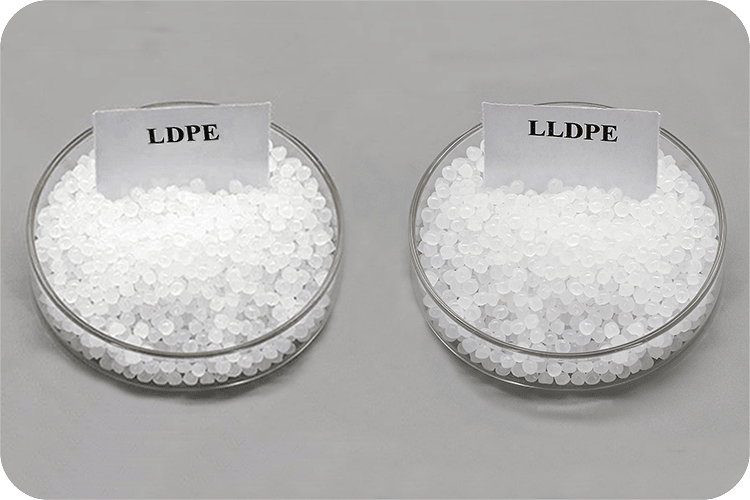
What Is The Difference Between LLDPE And LDPE?
Jan 17, 2023 Blog
What Are The Classification Of Plastics?
Get a free sample

Links: www.fescolo.com(Pneumatic)
FOKCA ©1998-2025 All Rights Reserved Sitemap