Jan 23, 2026
In automated equipment, vibration is rarely an isolated problem. It usually comes with high cycle rates, fast acceleration, and long operating hours. When a pneumatic fitting loosens under vibration, the result is not just air leakage—it can be unstable motion, repeated downtime, or even damage to cylinders and valves. Choosing the right pneumatic fitting for high-vibration environments therefore becomes a design decision, not a commodity purchase.
For distributors, equipment engineers, and procurement teams, the key is understanding how different pneumatic push-in fittings, quick couplings, actually hold the tube under dynamic loads, not how convenient they look on paper.
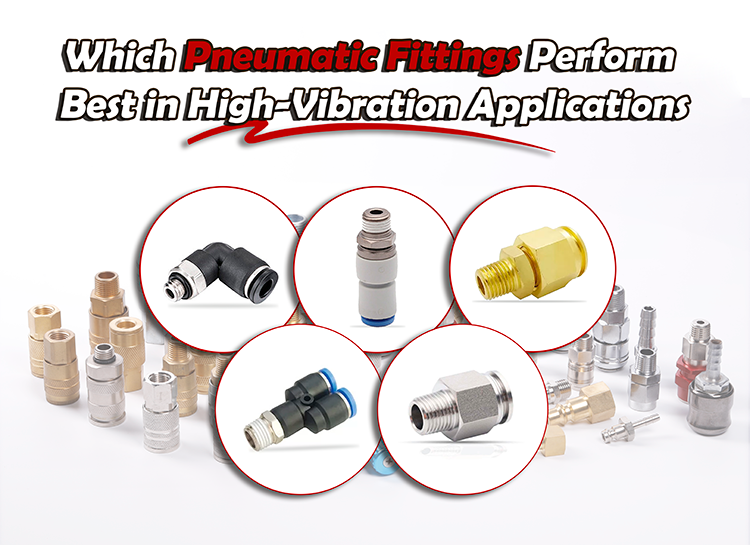
Vibration introduces continuous micro-movement along the tube’s axial direction. Over time, this movement works against the tube-gripping mechanism inside the fitting. In high-frequency motion—such as pick-and-place units, packaging machines, or robotic end-effectors—even a small loss of holding force can turn into a failure.
From a mechanical standpoint, the question is simple: does the fitting rely on elastic grip, surface friction, or permanent deformation to hold the tube? The answer determines whether it survives vibration or gradually lets go.
Pneumatic push-in fittings, also called push-to-connect fittings, are widely used because of their speed and simplicity. Internally, a stainless-steel grab ring bites into the outer wall of the tube while an O-ring provides sealing. This grab ring creates a limited mechanical key effect that resists axial pull-out.
Under moderate vibration, this design performs reasonably well—especially with softer tubing such as PU or PA. However, as tube hardness increases, the grab ring’s ability to bite in decreases. Harder tubes reduce bite depth, which directly lowers anti-vibration performance. In high-frequency motion, this often shows up as gradual tube creep rather than sudden failure.
In practice, push-in pneumatic fittings are best suited for applications where vibration exists but axial loads are low and tubing is not excessively rigid.
Threaded pneumatic fittings rely on compressing the tube wall or sealing surfaces to maintain air tightness. While this works well for pressure containment, it is not optimized for vibration.
Because the tube is held mainly by radial compression, repeated vibration can cause micro-slippage between the tube and fitting body. This is especially problematic with rigid nylon or metal tubing, where elastic recovery is minimal. Over time, the connection may loosen even if it was properly tightened during installation.
For engineers, the key takeaway is that good sealing does not equal good vibration resistance. These fittings are better suited for static or low-movement installations.
When vibration cannot be avoided, compression fittings (ferrule fittings) offer a fundamentally different holding mechanism. During installation, the ferrule is permanently deformed and bites into the tube surface, creating a positive mechanical lock rather than a friction-based grip.
This permanent deformation is what makes compression fittings particularly suitable for hard tubing, including stainless steel, copper, or rigid nylon. Once installed correctly, the tube is effectively locked in place, making axial movement under vibration extremely unlikely.
From a reliability standpoint, this design is often preferred in automated lines that run continuously or in equipment where access for maintenance is limited.
One common mistake in pneumatic system design is evaluating fittings without considering tubing material. In vibration-heavy environments, tube hardness directly affects grip performance:
1.Soft tubes deform easily, improving bite for push-in fittings
2.Hard tubes resist deformation, reducing holding force
3.Metal tubes require permanent mechanical locking
Ignoring this interaction often leads to premature fitting failure, even when pressure ratings are respected.
| Fitting Type | Tube Compatibility | Anti-Vibration Performance | Installation | Typical Use Case |
|---|---|---|---|---|
| Push-to-connect pneumatic fitting | Soft PU / PA | Medium | Very fast | Compact automation, moderate vibration |
| Threaded / quick coupling | Soft to medium | Low–Medium | Moderate | Static or low-motion systems |
| Compression (ferrule) fitting | Hard plastic / metal | High | Slower, precise | High-frequency vibration, rigid tubing |
Data based on industry application practices and field experience in automated equipment.
For distributors and OEM buyers, the decision should not be driven solely by installation speed or unit price. In high-vibration applications, failure cost outweighs fitting cost very quickly. A fitting that loosens after three months can stop an entire production line.
A practical rule used by many equipment engineers is simple:
If the tube is hard and the motion is continuous, avoid elastic gripping designs. Compression-type locking mechanisms provide predictable, long-term stability.
For high-frequency vibration, the best pneumatic fitting is rarely the fastest to install, but it is almost always the one that stays exactly where you put it.
(FK9026)
 PVC Tubing vs Polyurethane Tubing: Choosing the Better Air Hose for Modern Pneumatic Systems
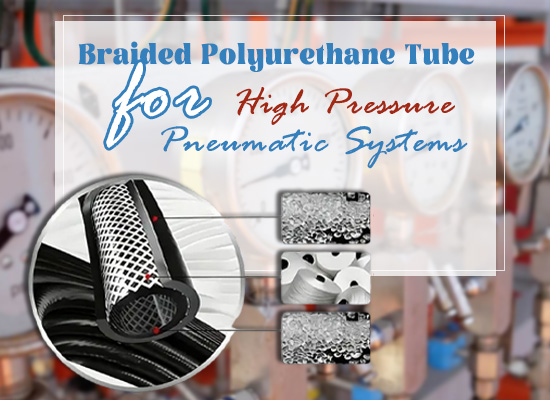 Braided Polyurethane Tube for High Pressure Pneumatic Systems
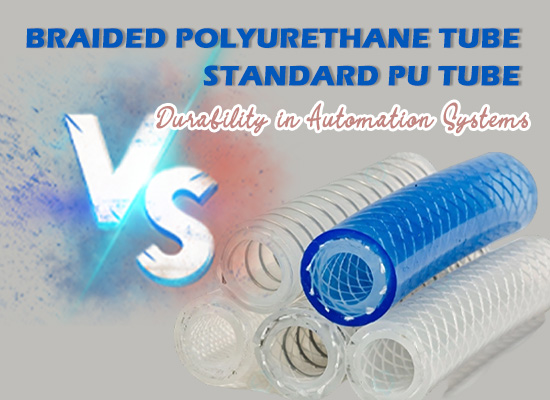 PUB Braided Polyurethane Tube vs Standard PU Tube: Durability in Automation Systems
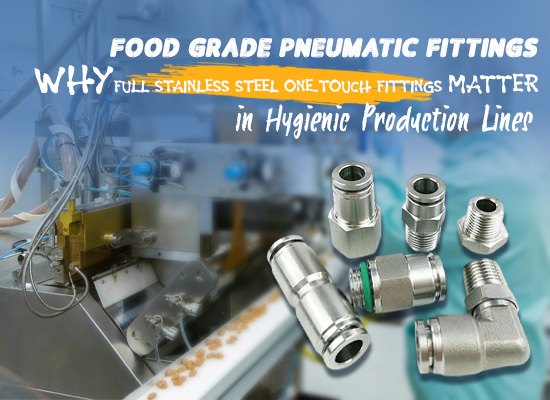 Food Grade Pneumatic Fittings: Why Full Stainless Steel One-Touch Fittings Matter in Hygienic Production Lines
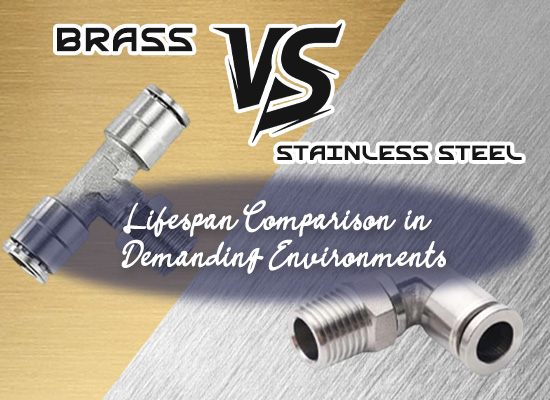 Brass vs Stainless Steel Fittings: Lifespan Comparison in Demanding Environments
You May Interest In

Jan 07, 2026 Blog
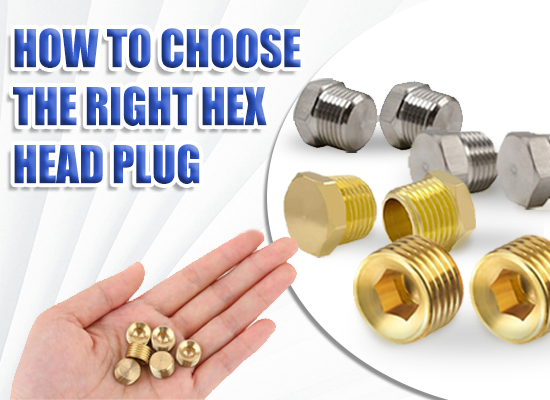
How to Choose the Right Hex Head Plug
Jan 06, 2026 Blog
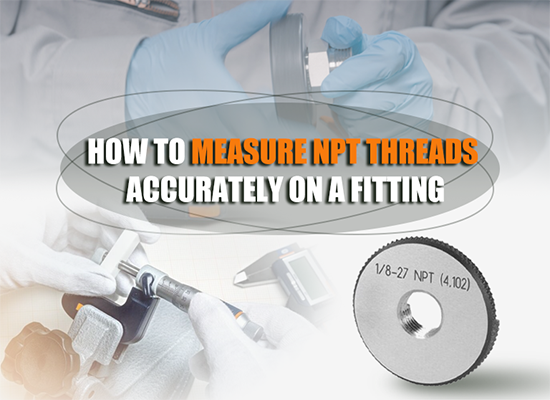
How to Measure NPT Threads Accurately on a Fitting

Get a free sample

Links: www.fescolo.com(Pneumatic)
FOKCA ©1998-2025 All Rights Reserved Sitemap