Jan 19, 2026
When engineers or buyers select a hydraulic quick coupling, the first parameter they usually check is working pressure. While pressure rating is important, relying on it alone is one of the most common causes of premature coupling failure, leakage, and connection difficulty in real hydraulic systems.
In practice, hydraulic quick coupling types operate under conditions that are far more complex than a single static pressure value. Instant pressure spikes, cyclic loads, temperature variation, and fluid compatibility all play a decisive role in long-term reliability. Ignoring these factors often leads to problems that are mistakenly blamed on hoses or pumps—when the root cause is actually the coupling selection.
Below are the key factors engineers should evaluate beyond nominal working pressure.
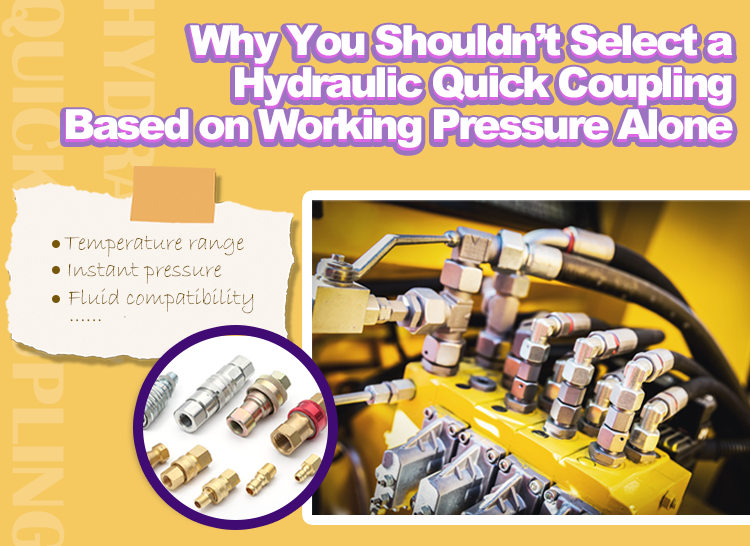
The pressure listed in system specifications usually refers to steady-state working pressure. However, during valve switching, pump start-up, or sudden load changes, the actual pressure inside the hydraulic line can spike well above that value.
These short-duration peaks may last only milliseconds, but they place extreme stress on the internal valve and sealing structure of a hydraulic quick coupling. If the coupling is selected with no safety margin for instant pressure, micro-deformation and seal fatigue begin almost immediately.
This is why experienced engineers focus not only on rated pressure, but also on maximum allowable pressure and safety factor, especially in mobile equipment and high-response systems.
Unlike static pressure, pulse pressure repeatedly loads and unloads the coupling during operation. Over time, this cyclic stress causes metal fatigue, spring relaxation, and accelerated seal wear.
Hydraulic quick coupling types used in systems with frequent pressure fluctuations—such as construction machinery, agricultural equipment, or automated hydraulic stations—must be designed for high pulse endurance. A coupling that survives static testing may still fail early if pulse performance is overlooked.
From a system perspective, pulse pressure is often the hidden reason why couplings with “sufficient pressure rating” still leak or become hard to connect after a few months of use.
Temperature affects both hydraulic oil behavior and sealing materials. At elevated temperatures, oil viscosity drops, increasing internal leakage and seal movement. At low temperatures, seals harden and lose elasticity, making them more vulnerable to damage during connection and disconnection.
A hydraulic quick coupling selected solely by pressure rating may perform well at room temperature but struggle in high-heat or cold-start conditions. Seal material compatibility and thermal expansion tolerance become critical here.
For systems exposed to wide temperature ranges, coupling selection should always consider pressure–temperature derating, not pressure alone.
Hydraulic oil type directly affects seal life and valve movement. Certain additives, synthetic fluids, or bio-based oils can accelerate seal swelling or hardening if materials are not properly matched.
When fluid compatibility is ignored, problems such as internal sticking, delayed pressure release, or incomplete valve closure may appear—often misdiagnosed as mechanical defects.
This is particularly relevant when selecting accessories such as a hydraulic quick coupling pressure decompression relief release tool, where seal response and valve timing are sensitive to fluid properties.
Many connection difficulties are not caused by excessive system pressure, but by residual pressure trapped inside the coupling body. Without proper pressure relief design, operators may struggle to reconnect lines safely, especially after shutdown.
Couplings with integrated pressure relief or decompression features significantly reduce this issue, improving safety and usability. From a selection standpoint, pressure management capability is just as important as pressure rating itself.
| Selection Factor | Why It Matters | Risk If Ignored |
|---|---|---|
| Working pressure | Baseline load | Underestimates real stress |
| Instant pressure | Short-term overload | Seal damage, deformation |
| Pulse pressure | Fatigue resistance | Early leakage, failure |
| Temperature range | Seal behavior | Hardening or swelling |
| Fluid compatibility | Material stability | Valve sticking, leaks |
| Pressure relief | Safe reconnection | Connection difficulty |
From a procurement perspective, selecting a hydraulic quick coupling purely by pressure rating may seem cost-effective. In reality, mismatched couplings increase maintenance frequency, downtime risk, and replacement cost.
Distributors and equipment manufacturers who evaluate pressure together with pulse load, temperature, and fluid compatibility achieve more predictable service life and fewer after-sales issues. This approach also simplifies standardization across multiple equipment platforms.
Working pressure is only the starting point. Instant pressure, pulse behavior, temperature range, fluid compatibility, and pressure relief capability together determine whether a hydraulic quick coupling will perform reliably over time.
Understanding these factors allows engineers, distributors, and buyers to make informed decisions that protect the system—not just meet a number on paper.
(FK9026)
 PVC Tubing vs Polyurethane Tubing: Choosing the Better Air Hose for Modern Pneumatic Systems
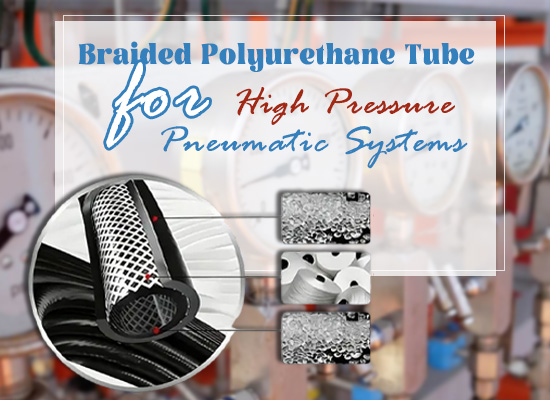 Braided Polyurethane Tube for High Pressure Pneumatic Systems
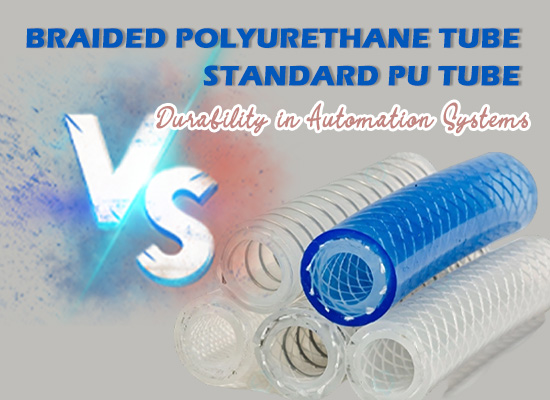 PUB Braided Polyurethane Tube vs Standard PU Tube: Durability in Automation Systems
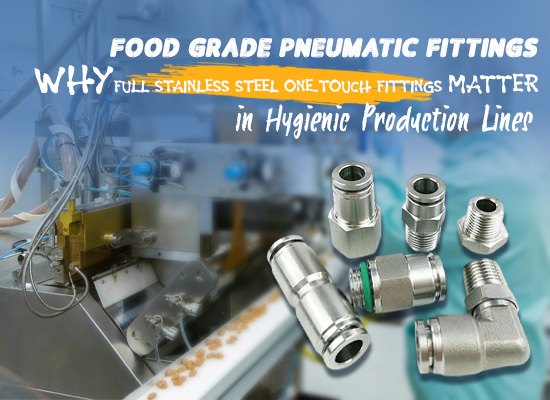 Food Grade Pneumatic Fittings: Why Full Stainless Steel One-Touch Fittings Matter in Hygienic Production Lines
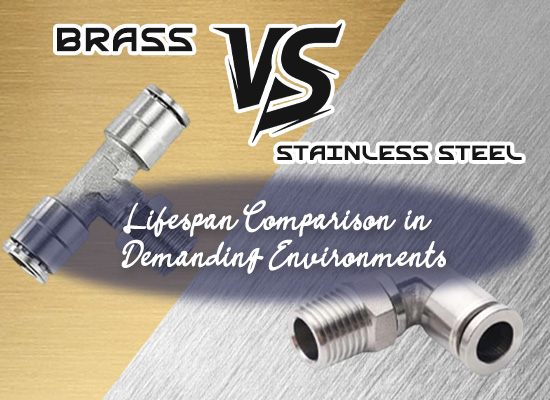 Brass vs Stainless Steel Fittings: Lifespan Comparison in Demanding Environments
You May Interest In
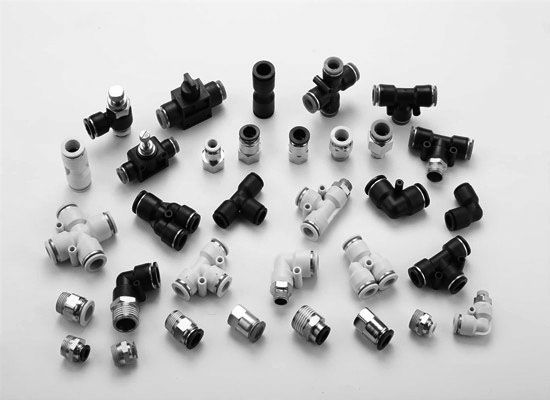
May 07, 2025 Blog
Comprehensive Analysis of Pneumatic Push in Fittings
Apr 22, 2025 Blog
Solution for Nylon Tube
Apr 16, 2025 Blog
PVC Tubing vs. Polyurethane Tubing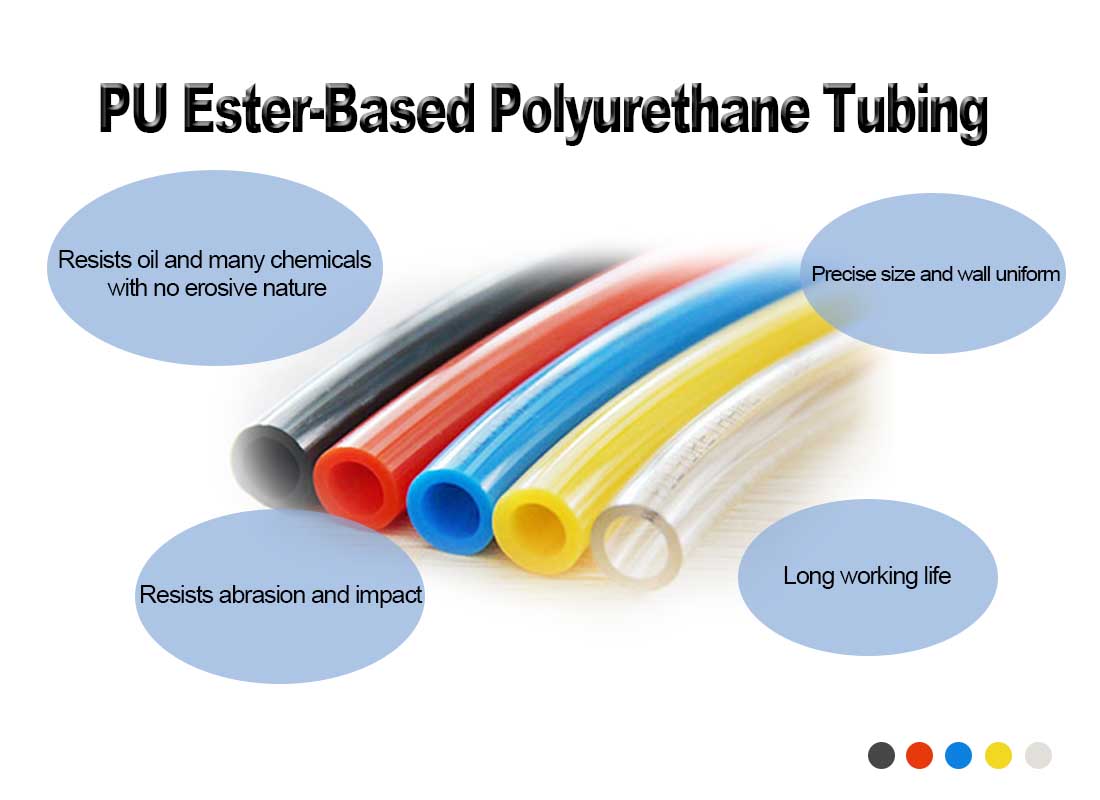
Apr 10, 2025 Blog
What is the difference between pu and pvc
Feb 24, 2025 Blog
How to Identify Hydraulic Quick Couplers?
Jan 21, 2025 Blog
How to Measure Pipe Thread?
Jan 16, 2025 Blog
What Is Pipe thread?
Dec 04, 2024 Blog
Application Of Tube Fitting
Jun 26, 2023 Blog
What Is The Difference Between LLDPE And LDPE?
Jan 17, 2023 Blog
What Are The Classification Of Plastics?
Get a free sample

Links: www.fescolo.com(Pneumatic)
FOKCA ©1998-2025 All Rights Reserved Sitemap