In pneumatic systems, controlling actuator speed seems straightforward—until inconsistent motion, pressure fluctuation, or load changes begin to affect performance. This is where the distinction between a Throttle Valve and a Flow Control Valve becomes important. Although these two components are often confused or even used interchangeably, their working principles, stability, and suitable applications are quite different.
Understanding these differences helps distributors, engineers, and buyers avoid misapplication and improve system reliability without unnecessary cost.
What Is a Throttle Valve?
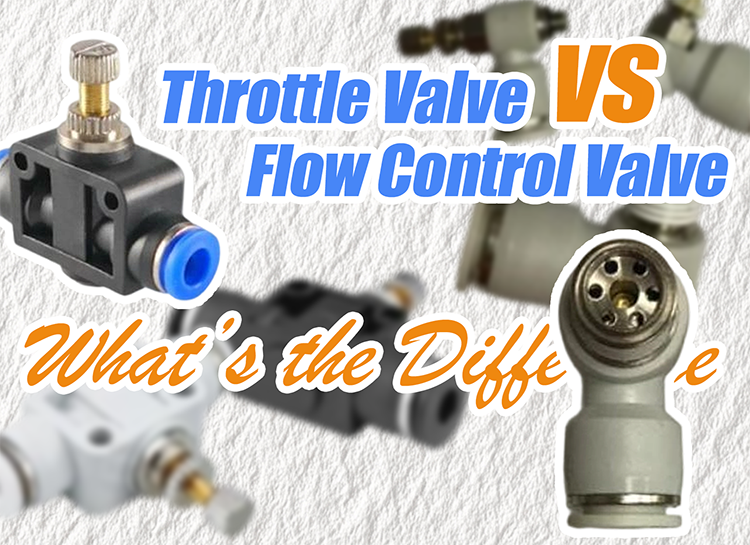
A Throttle Valve is the simplest form of flow control. It regulates air flow by reducing the effective flow area, usually through a needle or orifice adjustment. The more the valve is closed, the smaller the passage becomes, and the lower the air flow rate.
Throttle valves are widely used because they are:
1.Structurally simple
2.Easy to adjust
3.Cost-effective
However, a throttle valve does not compensate for pressure changes. If the load on a cylinder varies, or if supply pressure fluctuates, the actual flow rate will change accordingly. As a result, actuator speed may become unstable under real working conditions.
What Is a Flow Control Valve?
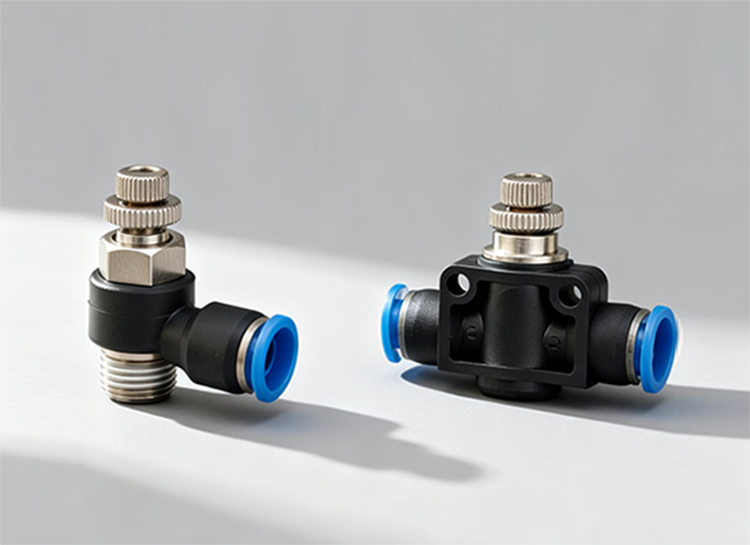
A Flow Control Valve builds upon the throttle valve concept by integrating a check valve. This allows air to flow freely in one direction while being throttled in the other. In pneumatic systems, this is typically used for meter-out control, where exhaust air is restricted to achieve smoother and more stable motion.
Compared with a basic throttle valve, a speed control valve offers:
1.Better speed stability under load variation
2.Reduced risk of stick-slip motion
3.More predictable cylinder movement
This makes speed control valves the standard choice for most modern pneumatic automation systems.
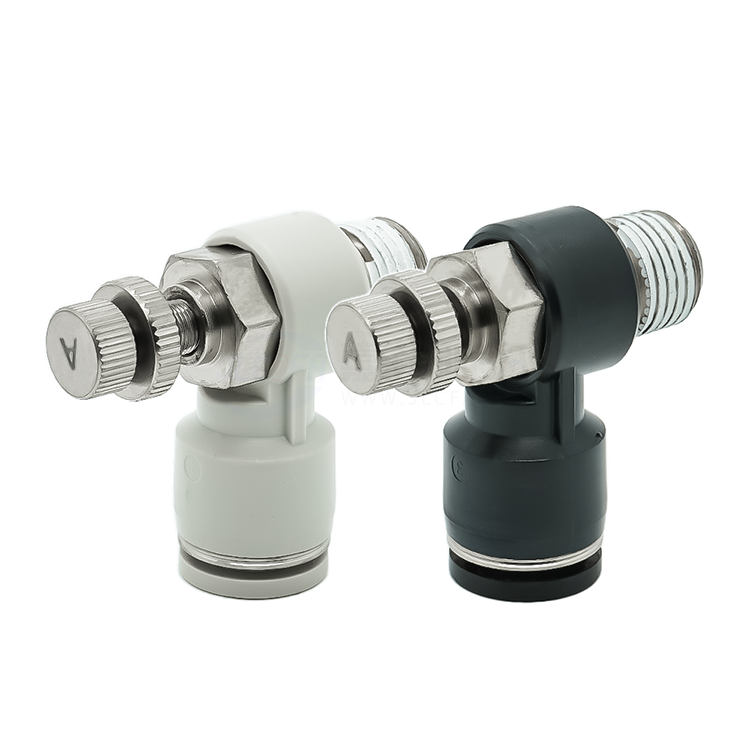
Key Differences Between Throttle Valve and Speed Control Valve
Although both are used to regulate flow, their behavior in real applications differs significantly.
| Aspect | Throttle Valve | Speed Control Valve |
|---|---|---|
| Basic structure | Adjustable orifice only | Throttle + check valve |
| Flow direction control | Same in both directions | Free flow one way, throttled the other |
| Load sensitivity | High | Low |
| Speed stability | Moderate | High |
| Typical control method | Meter-in or simple restriction | Meter-out (recommended) |
| Cost level | Lower | Medium |
In short, throttle valves control flow volume, while speed control valves control motion behavior.
Why Speed Control Valves Are More Stable in Practice
In pneumatic cylinders, air is compressible. When a throttle valve is used incorrectly—especially in meter-in configurations—pressure builds up unevenly, causing sudden acceleration or jerky motion when the load changes.
Speed control valves, by throttling the exhaust air instead, maintain back pressure in the cylinder. This creates a buffering effect, allowing smoother deceleration and consistent speed even when the load varies. For equipment engineers, this difference becomes critical in vertical motion, precision positioning, or high-cycle applications.
When a Throttle Valve Still Makes Sense
Despite their limitations, throttle valves are not obsolete. They remain suitable for:
1.Simple circuits with stable loads
2.Non-critical speed adjustment
3.Cost-sensitive applications
4.Auxiliary airflow regulation
For distributors and procurement teams, throttle valves offer a practical solution when performance requirements are modest and system conditions are predictable.
How to Choose Between a Throttle Valve and a Speed Control Valve
A practical selection guideline is:
◆Choose a Throttle Valve when airflow limitation is the goal and speed accuracy is not critical
◆Choose a Speed Control Valve when stable actuator speed matters, especially under varying loads
For most pneumatic cylinders in automated equipment, speed control valves provide a better balance between controllability and reliability, even at a slightly higher cost.
(FK9026)