Jan 15, 2026
In automated equipment with continuous motion, the service life of a pneumatic tube is often determined not by pressure rating, but by material fatigue under repeated bending. Pick-and-place systems, robotic arms, sliding modules, and compact assembly machines all expose pneumatic hoses to thousands—or millions—of bending cycles during operation.
Standard pneumatic tubes may meet static specifications, yet fail prematurely once installed in high-frequency motion environments. This is where PUB braided polyurethane tubes demonstrate a clear structural advantage.

Every bending cycle introduces localized tensile and compressive stress within the tube wall. Over time, these stresses lead to fatigue accumulation, even when operating pressure and temperature remain within limits.
For conventional polyurethane pneumatic tubes, stress tends to concentrate along the inner radius of the bend. As fatigue progresses, micro-cracks form, eventually resulting in leakage, wall thinning, or sudden rupture. In long-term operation, fatigue failure becomes inevitable if stress is not properly managed.
This explains why pneumatic hose failures often occur in dynamic systems long before their theoretical pressure life is reached.
Polyurethane is valued in pneumatic tube design for its elasticity, abrasion resistance, and flexibility. However, material fatigue is not only a function of the polymer itself, but also of how stress is distributed through the tube structure.
In a single-layer pneumatic tube, repeated bending forces are absorbed entirely by the polyurethane wall. Over extended cycles, this leads to gradual molecular chain fatigue and loss of mechanical integrity.
Reducing fatigue therefore requires redistributing stress, rather than simply increasing wall thickness or hardness.
A PUB braided polyurethane tube incorporates a reinforcing braided layer, typically made of polyester fibers, embedded between the inner and outer polyurethane layers. This braided structure fundamentally changes how stress is handled during bending.
Instead of concentrating stress at a single point, the braid distributes bending forces across multiple fiber paths, significantly reducing localized strain. During each bending cycle, part of the mechanical load is transferred from the polyurethane matrix to the reinforcement layer.
As a result, the tube maintains flexibility while achieving far superior fatigue resistance compared to standard pneumatic tubes.
In continuous-operation machinery, even small improvements in fatigue resistance can translate into substantially longer service life. PUB braided polyurethane tubes are particularly well suited for applications where hoses must bend repeatedly at fixed radii.
Typical benefits observed in long-term use include:
◆Reduced risk of micro-cracking
◆More stable outer diameter during motion
◆Lower probability of sudden failure
◆Improved consistency in pneumatic response
For equipment engineers, this means fewer unplanned shutdowns and lower maintenance frequency over the machine’s lifecycle.
| Feature | Standard PU Pneumatic Tube | PUB Braided Polyurethane Tube |
|---|---|---|
| Bending fatigue resistance | Moderate | High |
| Stress distribution | Concentrated | Dispersed via braid |
| Shape stability under motion | Limited | Improved |
| Suitable for high-cycle motion | Not ideal | Highly suitable |
| Typical service life | Shorter | Extended |
This comparison highlights why braided construction is often preferred in high-frequency pneumatic hose applications.
PUB braided polyurethane tubes are commonly used in:
1.Robotic automation and pick-and-place units
2.Sliding tables and linear motion systems
3.Packaging and labeling machinery
4.Continuous assembly lines with tight hose routing
In these environments, hose replacement costs are not limited to the component itself, but include downtime, labor, and production losses. Extending hose life therefore delivers measurable operational value.
As a manufacturer specializing in pneumatic tubes and reinforced pneumatic hoses, FOKCA designs PUB braided polyurethane tubes specifically for dynamic industrial environments. Material selection, braid density, and layer bonding are optimized to balance flexibility, pressure resistance, and fatigue life.
For distributors and OEM customers, FOKCA offers:
1.Stable, repeatable quality for long-term supply
2.Multiple diameter and pressure options
3.OEM/ODM customization for specific motion requirements
4.Technical support based on real application conditions
Selecting a pneumatic tube for high-frequency bending is not just a material choice—it is a structural decision. In long-running equipment, braided polyurethane construction often proves to be the most reliable solution.
(FK9026)
 PVC Tubing vs Polyurethane Tubing: Choosing the Better Air Hose for Modern Pneumatic Systems
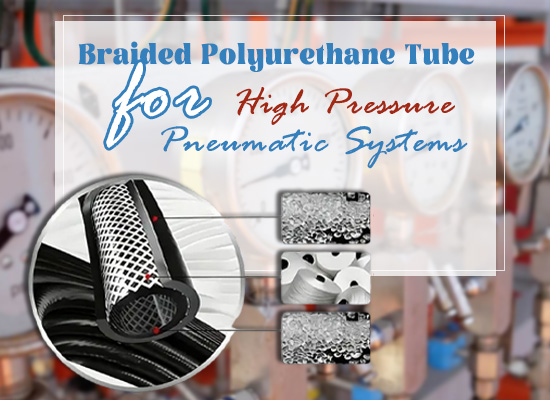 Braided Polyurethane Tube for High Pressure Pneumatic Systems
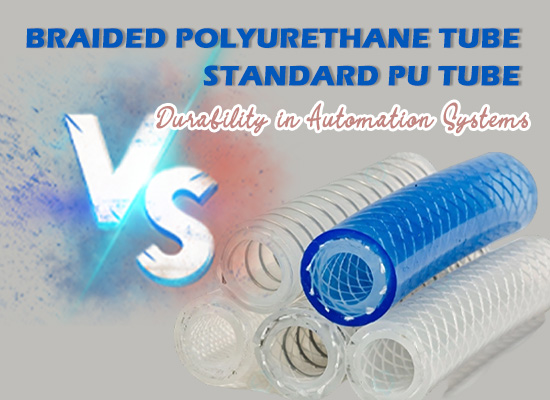 PUB Braided Polyurethane Tube vs Standard PU Tube: Durability in Automation Systems
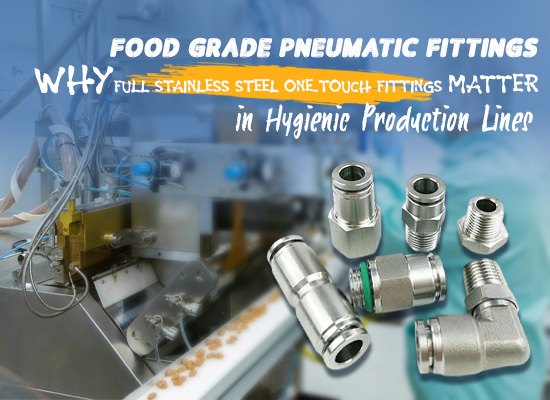 Food Grade Pneumatic Fittings: Why Full Stainless Steel One-Touch Fittings Matter in Hygienic Production Lines
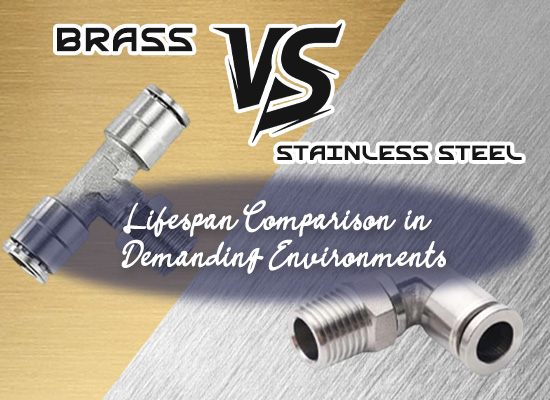 Brass vs Stainless Steel Fittings: Lifespan Comparison in Demanding Environments
You May Interest In
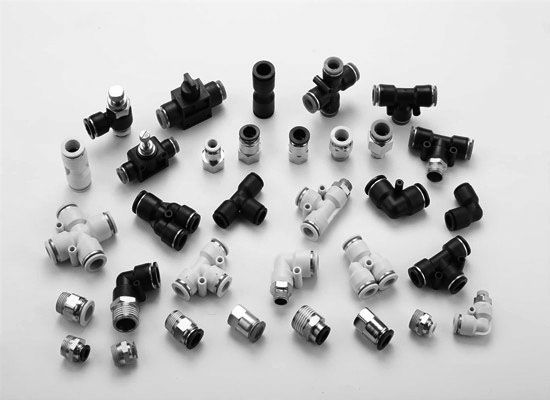
May 07, 2025 Blog
Comprehensive Analysis of Pneumatic Push in Fittings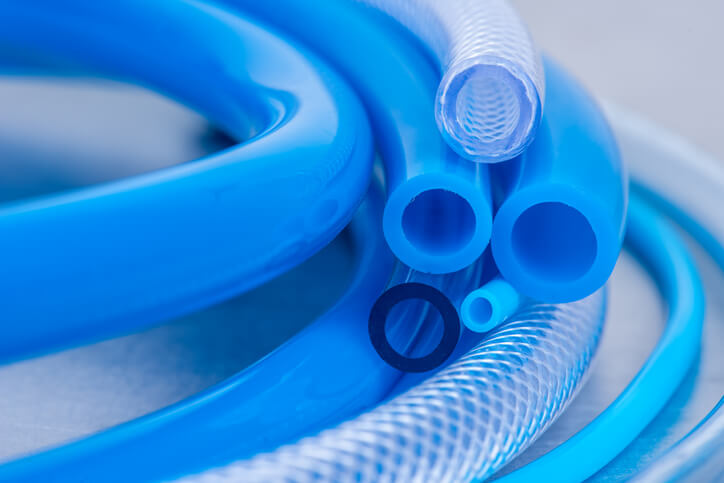
Apr 22, 2025 Blog
Solution for Nylon Tube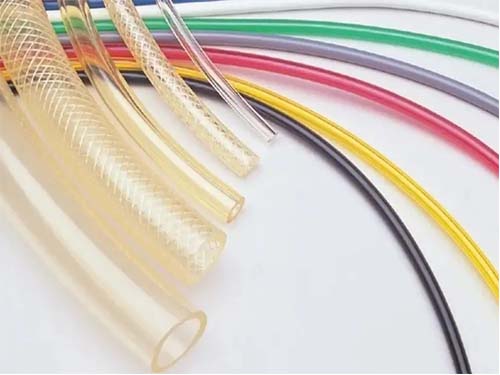
Apr 16, 2025 Blog
PVC Tubing vs. Polyurethane Tubing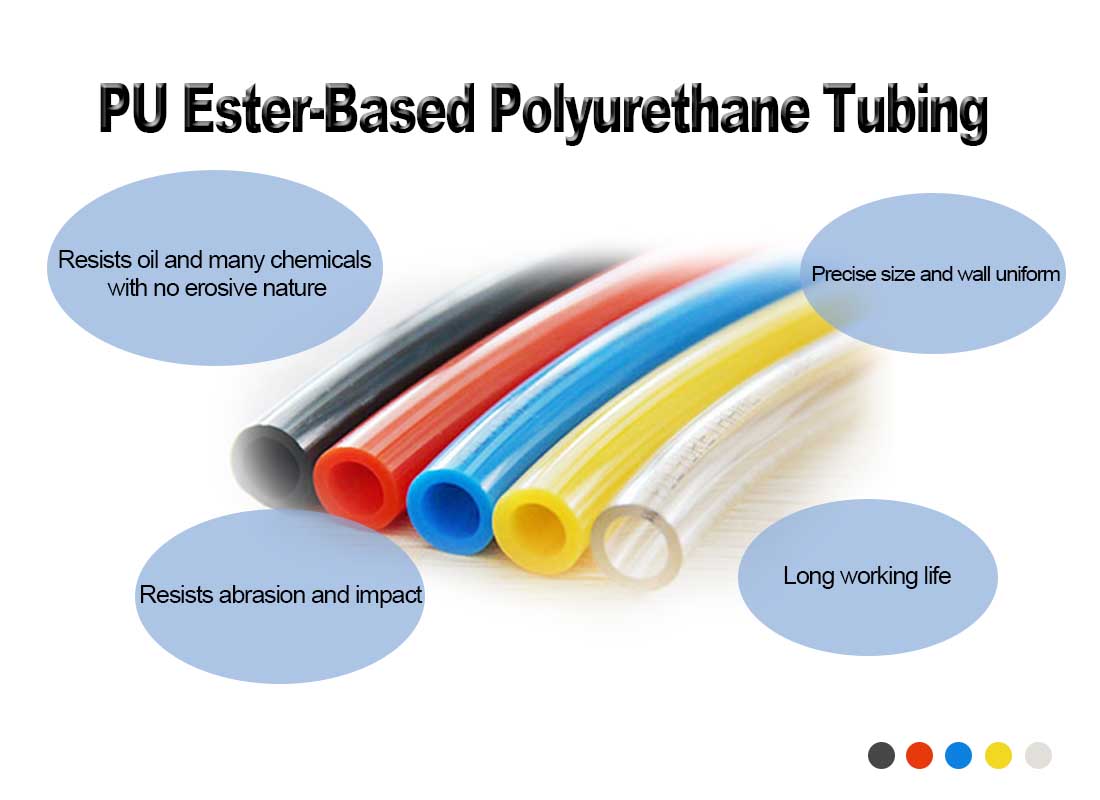
Apr 10, 2025 Blog
What is the difference between pu and pvc
Feb 24, 2025 Blog
How to Identify Hydraulic Quick Couplers?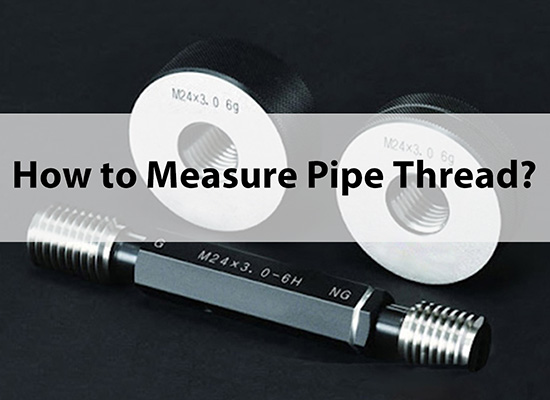
Jan 21, 2025 Blog
How to Measure Pipe Thread?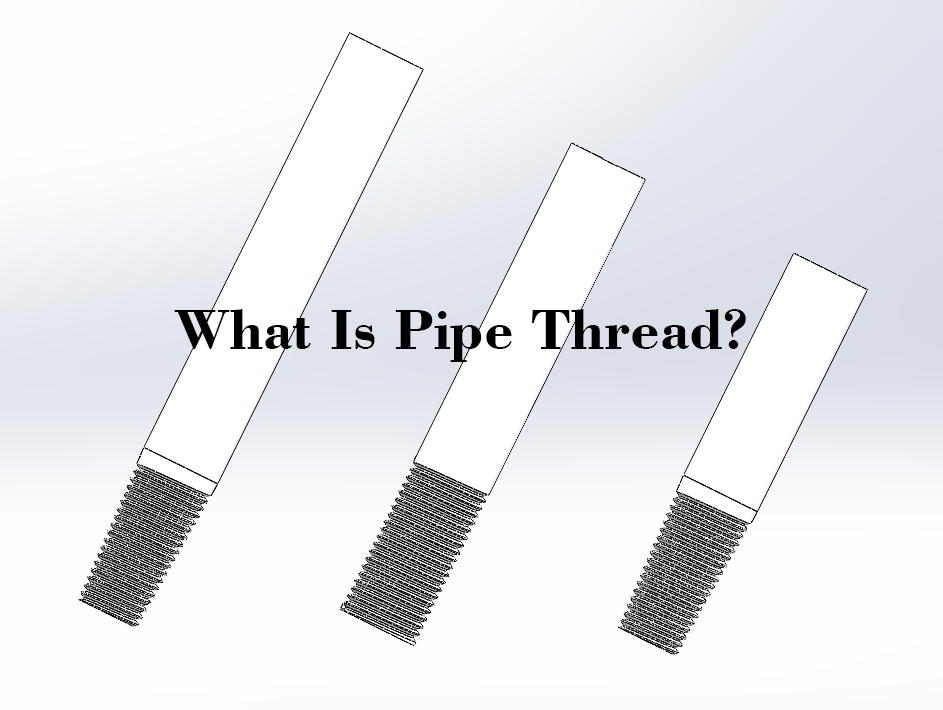
Jan 16, 2025 Blog
What Is Pipe thread?
Dec 04, 2024 Blog
Application Of Tube Fitting
Jun 26, 2023 Blog
What Is The Difference Between LLDPE And LDPE?
Jan 17, 2023 Blog
What Are The Classification Of Plastics?
Get a free sample

Links: www.fescolo.com(Pneumatic)
FOKCA ©1998-2025 All Rights Reserved Sitemap