Mar 10, 2026
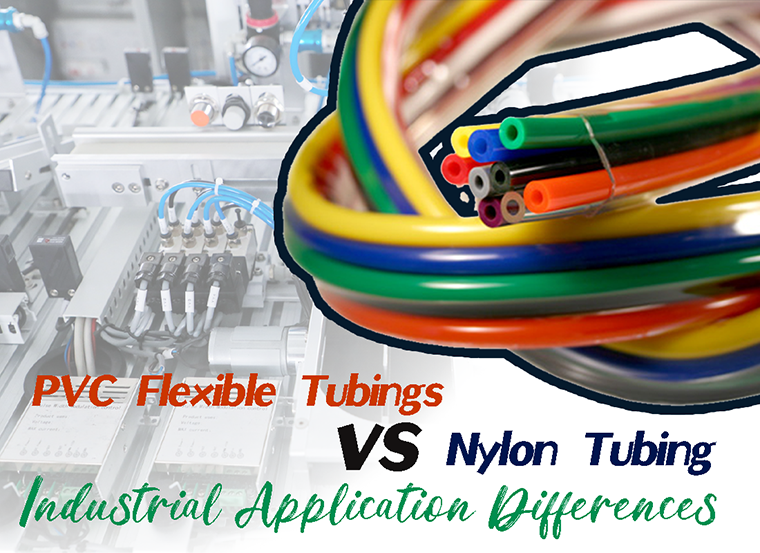
In industrial fluid and air transfer systems, tubing selection directly affects pressure stability, installation flexibility, and long-term maintenance costs. Two common options are PVC Flexible Tubings and nylon tubing, both widely used in automation equipment, pneumatic systems, and fluid transfer lines.
Although these materials may appear similar in basic applications, their mechanical strength, flexibility, and temperature tolerance are quite different. In practice, polyvinyl chloride tubing is typically used in low-pressure systems, while nylon tubing is preferred for high-pressure pneumatic circuits. Understanding these differences helps distributors, engineers, and purchasing managers select the right tubing for each system.
Pressure capacity is often the first factor engineers evaluate. Nylon tubing has a stronger molecular structure and higher tensile strength, allowing it to handle significantly higher working pressures than most PVC tubing.
In many pneumatic automation systems, nylon tubing can operate safely in environments where pressure fluctuations are common. By contrast, PVC Flexible Tubings are generally used in low-pressure air or fluid transfer systems, where extreme pressure resistance is not required.
Typical comparison:
| Property | PVC Flexible Tubings | Nylon Tubing |
|---|---|---|
| Working pressure | Low to medium | Medium to high |
| Burst pressure | Moderate | High |
| Pressure stability | Suitable for light systems | Better for demanding pneumatic systems |
Because of this difference, nylon tubing is widely used in high-pressure pneumatic control circuits, while polyvinyl chloride tubing is commonly found in low-pressure distribution lines.
Another important factor in tubing selection is flexibility. PVC Flexible Tubings are known for their soft structure and easy bending, which simplifies installation in compact equipment layouts.
When routing tubing through tight spaces inside automation machines, PVC tubing can bend easily without requiring large bending radii. This makes it a convenient option for fluid transfer, laboratory equipment, or small pneumatic installations.
In contrast, nylon tubing is more rigid, providing better structural stability but requiring more careful routing. While this rigidity helps maintain shape under pressure, it can make installation slightly more difficult in complex machine frames.
In many light industrial systems, engineers prefer PVC tubing because its flexibility reduces installation time and simplifies maintenance.
Material temperature tolerance also affects tubing performance. Nylon tubing typically offers a wider operating temperature range, making it suitable for harsher industrial environments.
For example, nylon materials maintain strength and dimensional stability in both cold and moderately high temperatures. This property makes nylon tubing a common choice in automotive manufacturing lines and high-temperature pneumatic circuits.
On the other hand, polyvinyl chloride tubing performs best in moderate temperature environments. When exposed to very low temperatures, PVC may become stiffer, while high temperatures can soften the material.
Typical temperature comparison:
| Material | Typical Operating Temperature |
|---|---|
| PVC tubing | −5°C to 60°C |
| Nylon tubing | −20°C to 100°C |
Because of this difference, nylon tubing is often selected for demanding industrial environments, while PVC Flexible Tubings are ideal for standard factory conditions.
Cost remains an important factor, especially for large-scale installations. PVC tubing is generally more economical than nylon tubing, making it attractive for applications where large quantities of tubing are required.
Many distributors and equipment manufacturers use PVC Flexible Tubings for fluid transfer, water systems, and low-pressure air lines, where the material provides sufficient performance at a lower cost.
In comparison, nylon tubing usually costs more due to its higher strength and performance characteristics. However, the higher price can be justified in applications where pressure resistance and durability are critical.
For procurement managers and system designers, balancing performance and cost often determines which tubing material is selected.
In real factory environments, the choice between PVC tubing and nylon tubing depends largely on system requirements.
Common applications of PVC Flexible Tubings include:
1.Low-pressure air distribution
2.Water and fluid transfer systems
3.Laboratory equipment
4.Cooling or drainage lines
Meanwhile, nylon tubing is frequently used in:
1.High-pressure pneumatic circuits
2.Industrial automation control systems
3.Automotive assembly lines
4.Hydraulic or air control panels
Each material serves a different role in industrial equipment, and selecting the correct tubing ensures reliable system operation.
Engineers designing pneumatic or fluid transfer systems often evaluate tubing materials together with compatible components such as pneumatic fittings, flow control valves, and automation cylinders. Proper material selection not only improves system reliability but also helps reduce long-term maintenance costs in industrial operations.
(FK9026)
 PVC Tubing vs Polyurethane Tubing: Choosing the Better Air Hose for Modern Pneumatic Systems
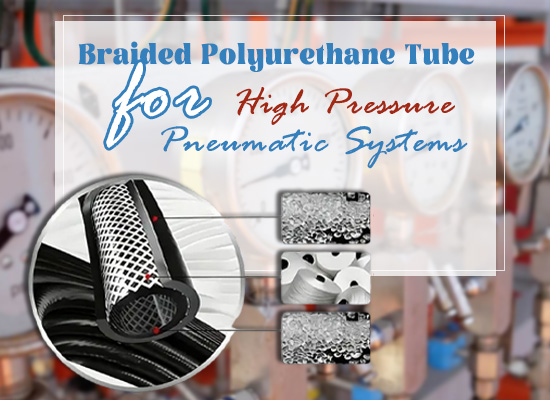 Braided Polyurethane Tube for High Pressure Pneumatic Systems
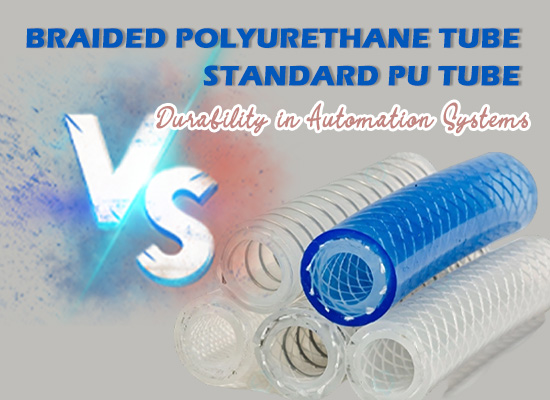 PUB Braided Polyurethane Tube vs Standard PU Tube: Durability in Automation Systems
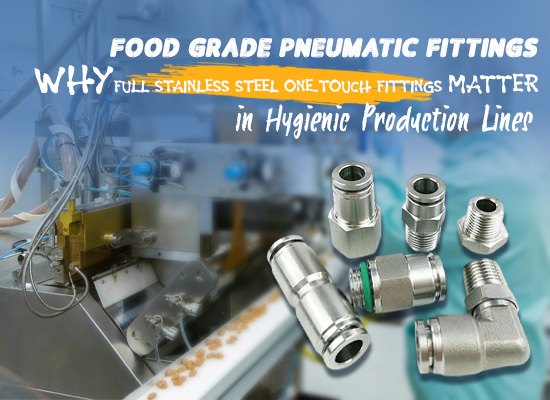 Food Grade Pneumatic Fittings: Why Full Stainless Steel One-Touch Fittings Matter in Hygienic Production Lines
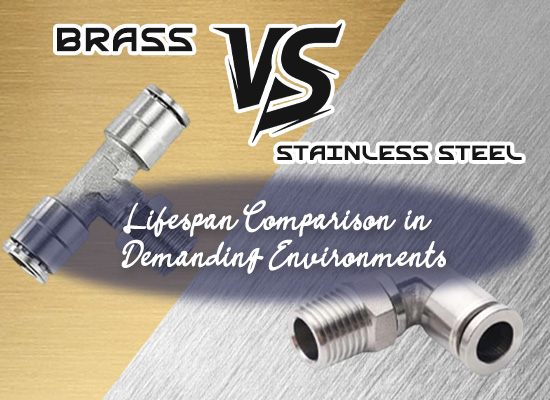 Brass vs Stainless Steel Fittings: Lifespan Comparison in Demanding Environments
You May Interest In
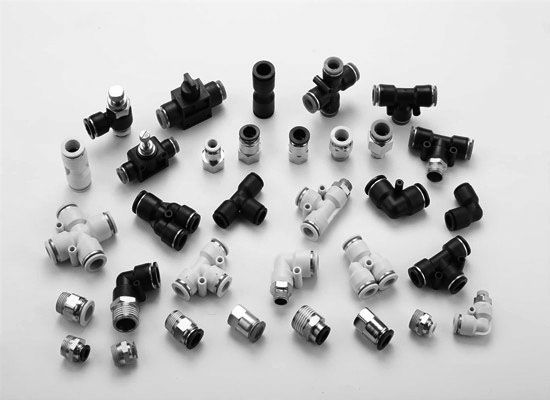
May 07, 2025 Blog
Comprehensive Analysis of Pneumatic Push in Fittings
Apr 22, 2025 Blog
Solution for Nylon Tube
Apr 16, 2025 Blog
PVC Tubing vs. Polyurethane Tubing
Apr 10, 2025 Blog
What is the difference between pu and pvc
Feb 24, 2025 Blog
How to Identify Hydraulic Quick Couplers?
Jan 21, 2025 Blog
How to Measure Pipe Thread?
Jan 16, 2025 Blog
What Is Pipe thread?
Dec 04, 2024 Blog
Application Of Tube Fitting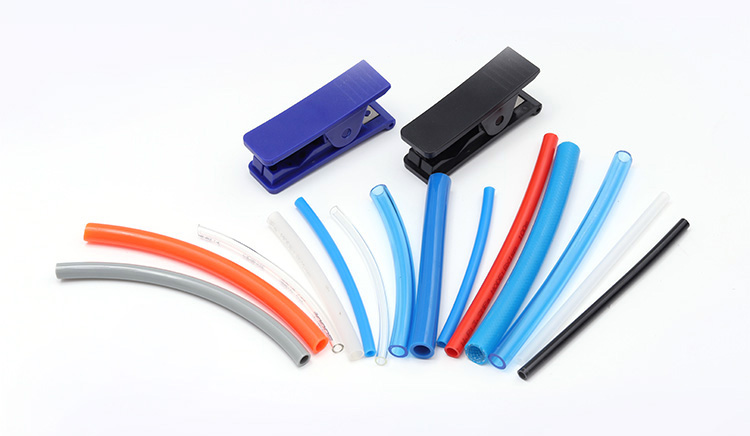
Jun 26, 2023 Blog
What Is The Difference Between LLDPE And LDPE?
Jan 17, 2023 Blog
What Are The Classification Of Plastics?
Get a free sample

Links: www.fescolo.com(Pneumatic)
FOKCA ©1998-2025 All Rights Reserved Sitemap