Mar 25, 2026
In compressed air systems, flow losses are often blamed on compressors or valves, yet the real restriction frequently comes from pneumatic fittings. Every bend, especially an elbow fitting, disrupts smooth airflow and creates pressure drops. For engineers and distributors working with push-to-connect fittings or Pneumatic Quick Coupling, understanding how geometry affects air flow efficiency can directly improve system performance and reduce energy waste.
Air prefers straight paths. When it encounters a 90-degree turn in an elbow fitting, turbulence increases and velocity distribution becomes uneven. This leads to localized pressure loss and reduced downstream force output.
Compared to straight pneumatic push in fitting designs, elbows introduce:
◆Flow separation zones
◆Increased friction along inner walls
◆Energy loss due to turbulence
In high-speed automation lines, even small inefficiencies accumulate into noticeable cycle delays.
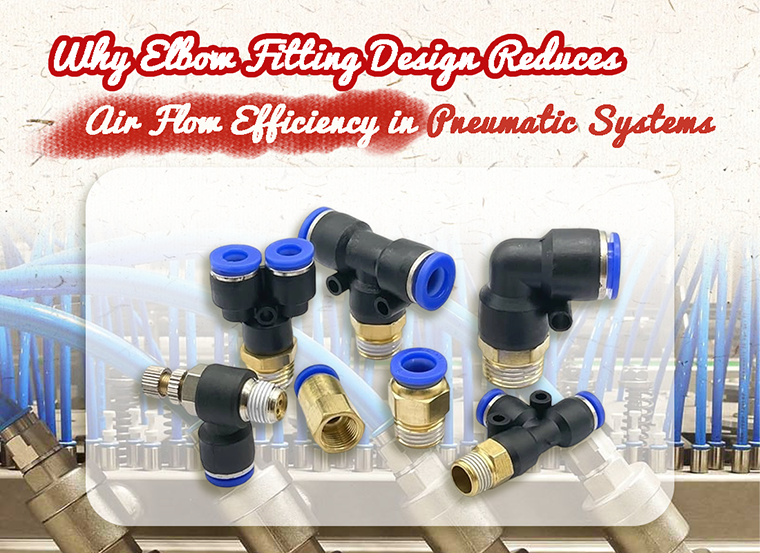
Engineers often underestimate how much a single bend can affect performance. The table below shows typical pressure loss comparisons based on industry test data:
| Fitting Type | Relative Pressure Loss | Flow Efficiency |
|---|---|---|
| Straight fitting | Low | High |
| 45° elbow fitting | Medium | Moderate |
| 90° elbow fitting | High | Lower |
| Pneumatic Quick Coupling | Medium–High | Moderate |
A 90° elbow can cause up to 20–30% higher pressure drop compared to straight connections under the same conditions. This directly impacts actuator speed and output consistency.
From a system design perspective, minimizing bends is one of the simplest ways to improve air flow efficiency. Each additional elbow compounds resistance, especially in long tubing runs.
A more efficient layout typically includes:
◆Fewer directional changes
◆Larger radius bends where possible
◆Strategic placement of push-to-connect fittings
For example, in packaging machinery, replacing three elbows with a single curved hose often improves response time without changing the cylinder or valve.
Not all fittings behave the same, even with identical shapes. The internal surface finish and material also influence airflow.
◆Brass fittings: good balance of cost and performance
◆Stainless steel fittings: better corrosion resistance and smoother internal surfaces
◆Engineering plastics: lightweight but may introduce micro-resistance over time
Higher-quality pneumatic fittings are typically designed with smoother internal transitions, reducing turbulence at connection points.
Despite their drawbacks, elbows are unavoidable in compact equipment. The key is using them strategically rather than excessively.
Situations where elbows are justified:
◆Limited installation space
◆Complex routing around moving components
◆Modular equipment requiring flexible layouts
In such cases, choosing optimized designs like full-flow elbow fittings or combining them with high-quality Pneumatic Quick Coupling solutions can mitigate losses.
When selecting fittings for a project, performance should be evaluated alongside convenience.
1.Prioritize straight pneumatic push in fitting where possible
2.Limit the number of 90° elbow fitting connections
3.Match fitting size with tubing to avoid bottlenecks
4.Use reliable connectors like push-to-connect fittings to reduce leakage risk
For projects requiring customized layouts, solutions such as custom pneumatic cylinders and integrated air routing systems from FOKCA can further optimize airflow paths and reduce unnecessary bends.
Air systems rarely fail because of a single component; inefficiency builds through small design compromises. By reducing reliance on elbow connections and choosing high-quality pneumatic fittings, both engineers and distributors can deliver systems that are not only more efficient, but also more reliable in long-term operation.
(FK9026)
 PVC Tubing vs Polyurethane Tubing: Choosing the Better Air Hose for Modern Pneumatic Systems
 Braided Polyurethane Tube for High Pressure Pneumatic Systems
 PUB Braided Polyurethane Tube vs Standard PU Tube: Durability in Automation Systems
 Food Grade Pneumatic Fittings: Why Full Stainless Steel One-Touch Fittings Matter in Hygienic Production Lines
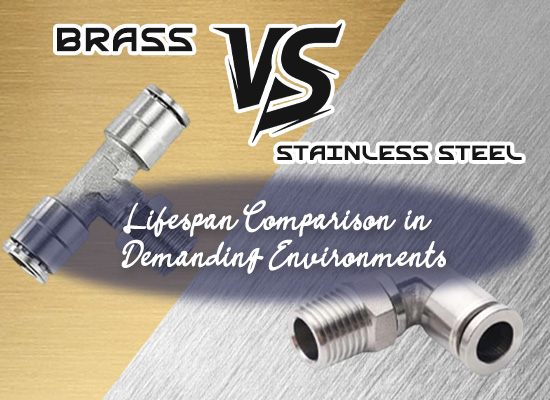 Brass vs Stainless Steel Fittings: Lifespan Comparison in Demanding Environments
You May Interest In
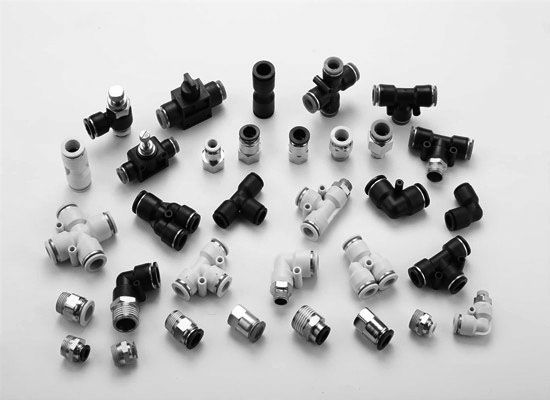
May 07, 2025 Blog
Comprehensive Analysis of Pneumatic Push in Fittings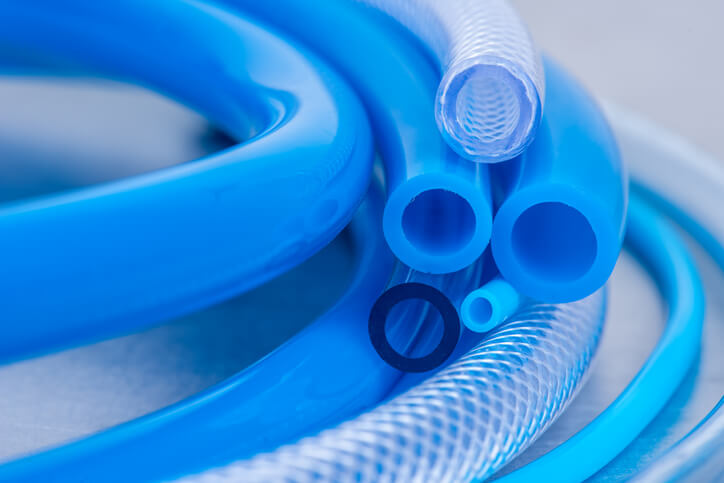
Apr 22, 2025 Blog
Solution for Nylon Tube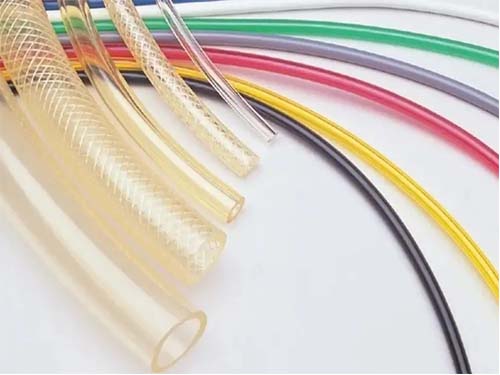
Apr 16, 2025 Blog
PVC Tubing vs. Polyurethane Tubing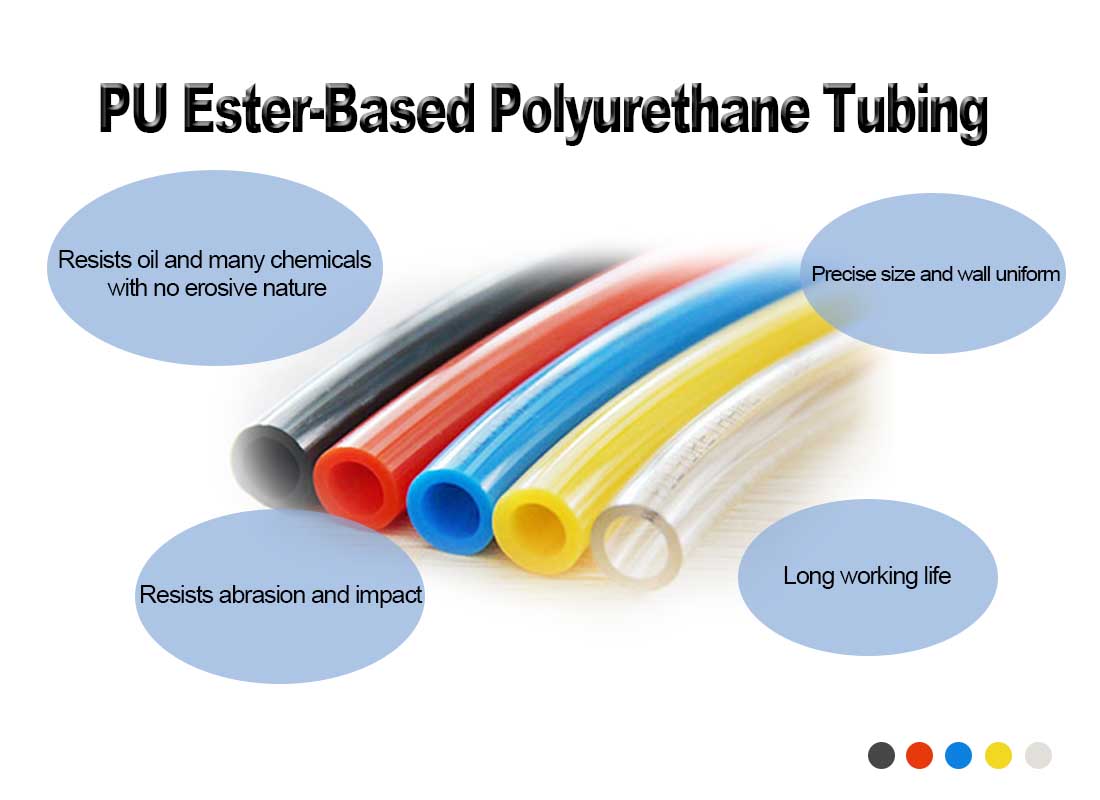
Apr 10, 2025 Blog
What is the difference between pu and pvc
Feb 24, 2025 Blog
How to Identify Hydraulic Quick Couplers?
Jan 21, 2025 Blog
How to Measure Pipe Thread?
Jan 16, 2025 Blog
What Is Pipe thread?
Dec 04, 2024 Blog
Application Of Tube Fitting
Jun 26, 2023 Blog
What Is The Difference Between LLDPE And LDPE?
Jan 17, 2023 Blog
What Are The Classification Of Plastics?
Get a free sample

Links: www.fescolo.com(Pneumatic)
FOKCA ©1998-2025 All Rights Reserved Sitemap