Compressed air systems often use different connection methods depending on how the equipment is operated and maintained. Two of the most common solutions are pneumatic quick coupling and push in fitting designs. While both allow convenient tube connections in automation systems, their roles are quite different. For engineers, distributors, and purchasing teams, understanding where a quick connect air fitting performs better than a pneumatic push fitting can improve system efficiency and maintenance speed.
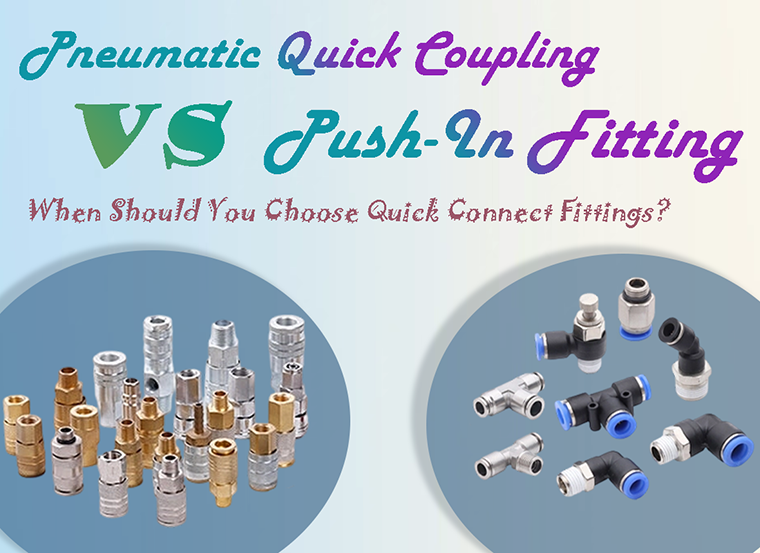
Structural Differences Between Pneumatic Quick Coupling and Push-In Fitting
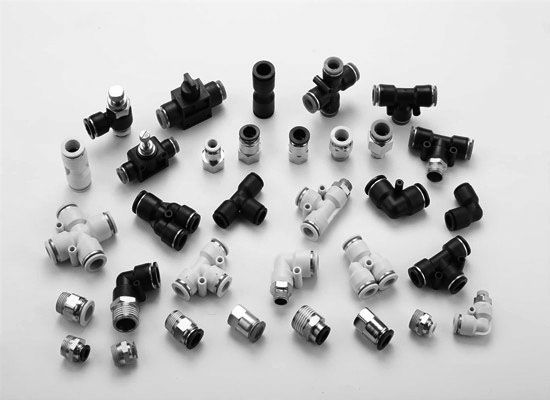
The main distinction lies in how each connector locks the air line in place. A push in fitting uses an internal collet and sealing ring to hold a plastic pneumatic tube. Once inserted, the tube stays fixed until the release ring is pressed.
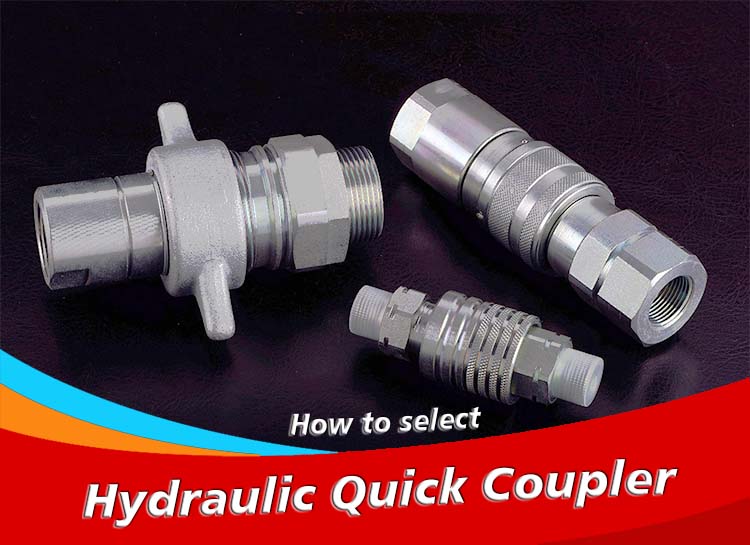
A pneumatic quick coupling, by contrast, is designed for repeated connection and disconnection. It usually includes locking balls, a sliding sleeve, and an internal valve structure, allowing the user to connect or disconnect air hoses instantly.
Because of this design, quick connect air fittings are better suited for flexible connections, while push fittings are typically installed as semi-permanent parts of the pneumatic circuit.
Installation and Maintenance Efficiency
In automated equipment, maintenance time directly affects productivity. A pneumatic push fitting works well when tubing rarely needs to be removed. Once installed on valves, cylinders, or manifolds, it provides a stable air connection.
However, systems that require frequent maintenance benefit more from a pneumatic quick coupling. Operators can disconnect the air hose within seconds without tools.
Typical examples include:
1.Air compressor output lines
2.Pneumatic tool connections
3.Maintenance air supply ports
Quick couplings significantly reduce downtime during equipment servicing, especially in factories where machines operate continuously.
Typical Application Scenarios
Different industrial scenarios determine whether a push in fitting or an air quick connector is the better solution. The following comparison highlights their common usage environments.
| Application Scenario | Push In Fitting | Pneumatic Quick Coupling |
|---|---|---|
| Fixed tubing in automation equipment | Common | Rare |
| Air cylinder and valve connections | Common | Rare |
| Air compressor hose connection | Limited | Common |
| Pneumatic tools and air guns | Not suitable | Ideal |
| Equipment maintenance ports | Limited | Common |
For example, many packaging machines use pneumatic push fitting connectors inside the machine frame, while external air supply points often rely on quick connect air fittings for convenient hose attachment.
Modular Production Lines and Air Supply Switching
Modern factories increasingly use modular equipment layouts. In such environments, machines may need to be relocated or connected to different air supply points.
A pneumatic quick coupling allows operators to switch air lines quickly without disassembling tubing networks. This flexibility is especially useful in:
1.Assembly lines
2.Robotic workstations
3.Temporary test benches
In contrast, a pneumatic push fitting is designed for stable internal piping rather than frequent reconnection. Using the right connection type helps maintain both reliability and operational flexibility.
Selection Tips for Engineers and Buyers
When choosing between a pneumatic quick coupling and a push in fitting, engineers typically consider three factors: maintenance frequency, tubing structure, and operating convenience.
Choose push-in fittings when:
1.Tubing is permanently installed
2.Equipment space is limited
3.Connections rarely need removal
Choose pneumatic quick couplings when:
1.Air hoses must be connected and disconnected frequently
2.Pneumatic tools or compressors are used
3.Equipment requires quick maintenance access
For automation systems that require reliable tube connections, high-quality pneumatic push fittings are widely used with cylinders and valves. Many manufacturers also combine them with accessories such as
pneumatic cylinders or air preparation units to build stable pneumatic circuits.
Meanwhile, external air supply interfaces often rely on durable quick connect air fittings, which provide faster operation and improved user convenience.
Practical Combination in Industrial Pneumatic Systems
In most factories, these two connectors are not competitors but complementary components. Internal pipelines usually rely on pneumatic push fitting connections, while service ports and tools benefit from pneumatic quick coupling systems.
This hybrid approach helps engineers balance system stability and operational flexibility. By selecting the appropriate connector for each part of the air circuit, manufacturers can reduce downtime, simplify maintenance, and improve the overall reliability of pneumatic equipment.
For applications requiring flexible air supply connections, many automation systems integrate air quick connectors together with modular pneumatic components, enabling fast installation and efficient system operation.
(FK9026)