Feb 06, 2026
Polyurethane tubing is valued for flexibility and wear resistance, yet many users encounter gradual aging known as hydrolysis. The essence of this process is that water molecules cut the urethane bonds in the polymer chain of a PU tube. For engineers and distributors, the key point is that hydrolysis is not an on-off event like a sudden failure. It happens continuously, just like evaporation, and its speed changes with environment. Understanding these mechanisms helps buyers choose suitable PU hose and avoid unexpected downtime.
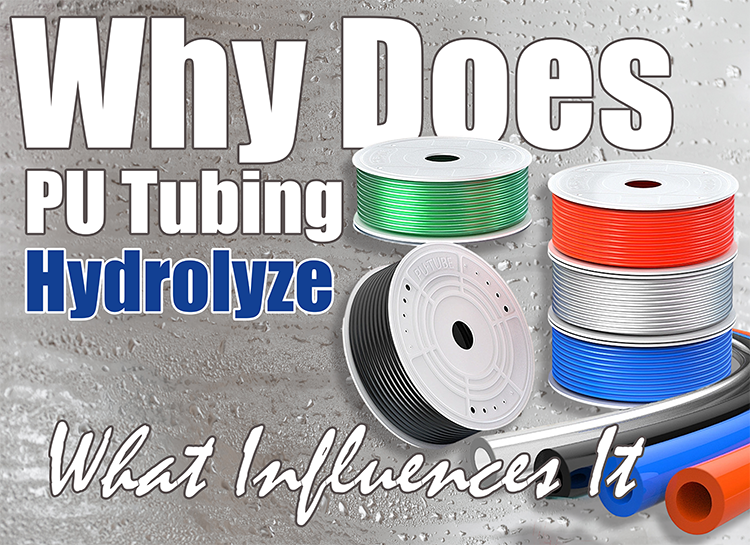
Hydrolysis occurs when moisture attacks the molecular structure of polyurethane air tubing, breaking the carbamate links that provide strength. This reaction reduces elasticity, causes surface cracking, and finally leads to air leakage. In practice, users may only notice stiffness or discoloration, but the internal chain scission has already started long before visible damage. That is why two hoses produced in the same month can show very different lifetimes in different workshops.
Among all factors, temperature plays the dominant role. Under normal room conditions the degradation of polyurethane pu tubing is relatively slow, but every 10°C rise can increase the hydrolysis rate by about 2–3 times. Machines installed near heat sources, compressors, or outdoor sunlight often shorten hose life dramatically. Distributors should pay attention to the working temperature declared by the manufacturer rather than only the pressure rating.
Moisture level is the second critical element. At low humidity the reaction speed grows gently, yet once the environment reaches high humidity, the hydrolysis of Polyurethane tubing accelerates in an almost exponential way. Food processing plants, coastal factories, and cleaning areas are typical high-risk scenes. Many users replace hoses frequently without realizing that humidity control would be more effective than simply buying thicker products.
| Condition | Tendency | Practical Result |
|---|---|---|
| Temperature +10°C | Rate ×2–3 | Faster hardening |
| Low humidity | Slow increase | Normal service life |
| High humidity | Exponential | Cracks and leakage |
| Strong acid/alkali | Sharp rise | Rapid failure |
Chemical atmosphere also determines how fast a PU tube ages. Mild acidic or alkaline conditions may show little effect at first, but strong acid or strong alkali will obviously speed up chain breakage. Electroplating workshops and cleaning equipment are typical examples. In these places, even premium PU hose needs additional protection or alternative materials. Selecting the correct grade with chemical resistance is more economical than frequent replacement.
Practical experience shows that reasonable installation can greatly extend the life of polyurethane air tubing. Avoid routing near heat sources, keep the hose away from continuous water spray, and ensure the air system has proper filtration and drying. For distributors, explaining these points to customers builds trust and reduces complaints. When choosing suppliers, ask for hydrolysis resistance data and material formulation rather than only price per meter.
Selecting the right polyurethane pu tubing is not only about pressure rating. Understanding hydrolysis allows engineers and purchasers to match product with real environment, protect equipment reliability, and create long-term value for distributors and end users.
(FK9026)
 PVC Tubing vs Polyurethane Tubing: Choosing the Better Air Hose for Modern Pneumatic Systems
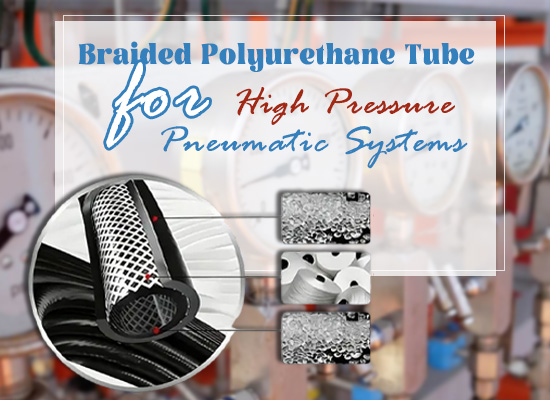 Braided Polyurethane Tube for High Pressure Pneumatic Systems
 PUB Braided Polyurethane Tube vs Standard PU Tube: Durability in Automation Systems
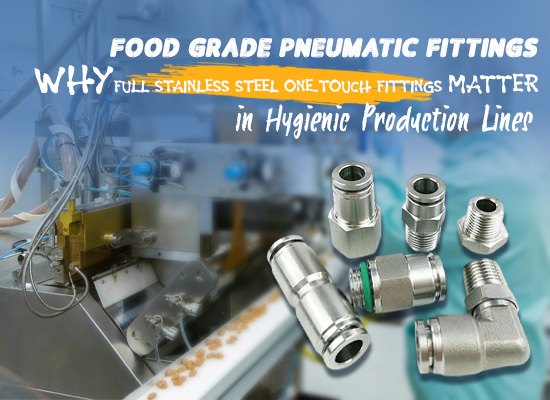 Food Grade Pneumatic Fittings: Why Full Stainless Steel One-Touch Fittings Matter in Hygienic Production Lines
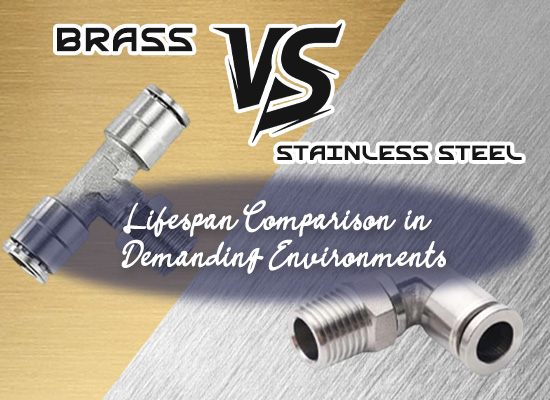 Brass vs Stainless Steel Fittings: Lifespan Comparison in Demanding Environments
You May Interest In
May 07, 2025 Blog
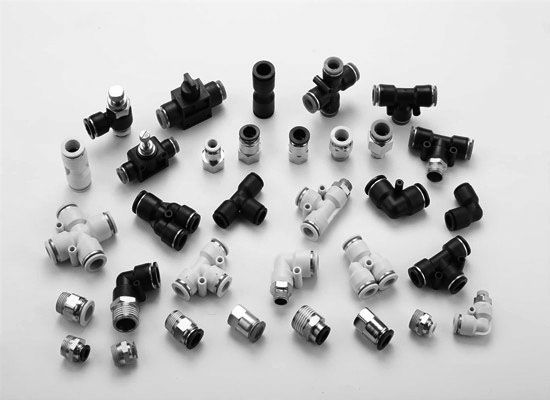
Comprehensive Analysis of Pneumatic Push in Fittings
Apr 22, 2025 Blog
Solution for Nylon Tube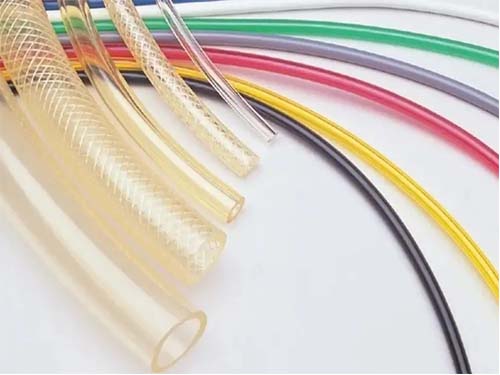
Apr 16, 2025 Blog
PVC Tubing vs. Polyurethane Tubing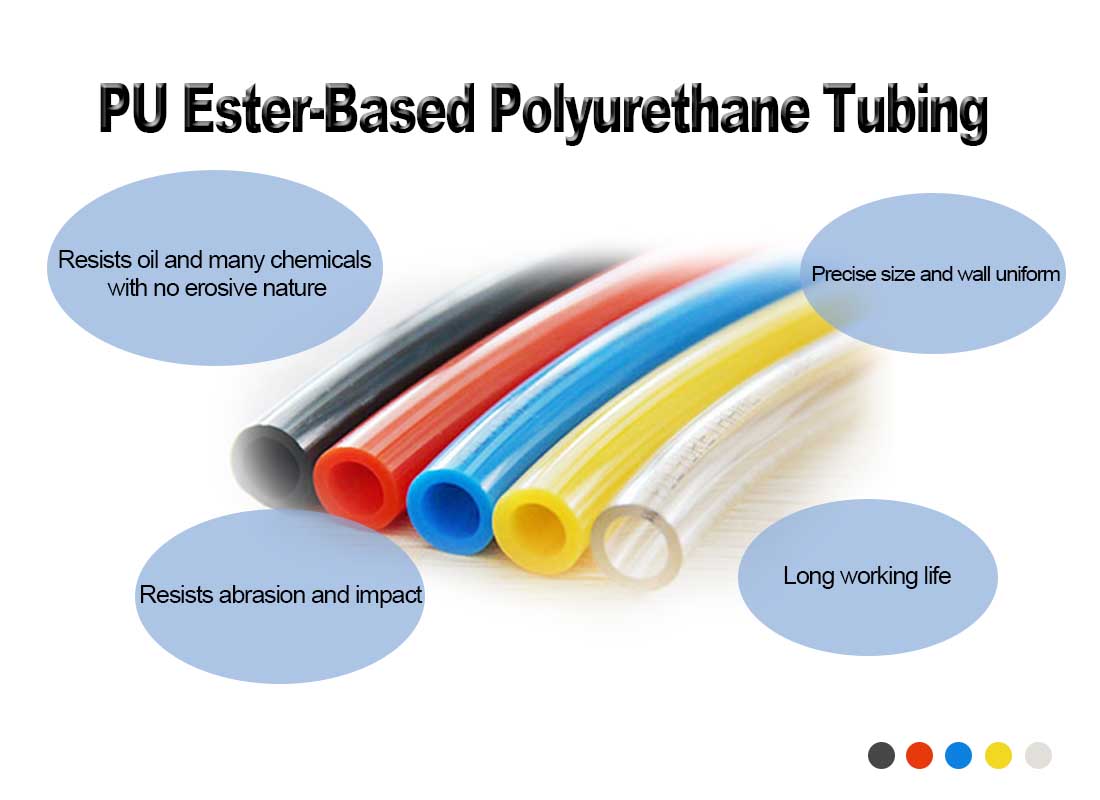
Apr 10, 2025 Blog
What is the difference between pu and pvc
Feb 24, 2025 Blog
How to Identify Hydraulic Quick Couplers?
Jan 21, 2025 Blog
How to Measure Pipe Thread?
Jan 16, 2025 Blog
What Is Pipe thread?
Dec 04, 2024 Blog
Application Of Tube Fitting
Jun 26, 2023 Blog
What Is The Difference Between LLDPE And LDPE?
Jan 17, 2023 Blog
What Are The Classification Of Plastics?
Get a free sample

Links: www.fescolo.com(Pneumatic)
FOKCA ©1998-2025 All Rights Reserved Sitemap