Mar 16, 2026
In pneumatic systems, tubing is expected to deliver compressed air smoothly between valves, cylinders, and fittings. However, improper installation often introduces hidden mechanical stress into the hose. When a pneumatic polyurethane tubing line is twisted, stretched, or forced into position, internal stress builds up along the tube wall. Over time, this stress can cause leakage, deformation, or premature fatigue. Understanding how stress forms in PU tube, PE tubing, or nylon hose installations helps engineers maintain stable and durable air systems.
Tubing stress usually appears during installation rather than operation. When installers force a hose to reach a connection point, the tube may be twisted or bent beyond its natural curvature. This issue is common when routing air hose lines in compact machinery.
In these situations, the tube constantly tries to return to its original shape. Residual stress remains inside the tubing wall, placing extra load on the fitting connection. Over time, this tension may cause small leaks or loosen the connection point.
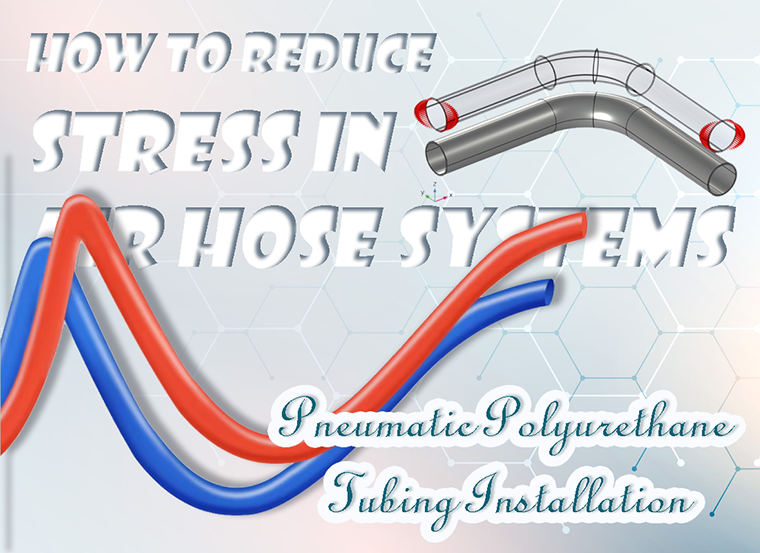
Not all pneumatic tubes respond to stress in the same way. Material flexibility plays an important role in how the tube handles bending or twisting forces.
For example, Polyurethane tubing and PE tubing are relatively soft materials. They can tolerate moderate bending without creating excessive internal stress. In contrast, PA tubing (nylon hose) and PTFE tubing are much stiffer.
The following comparison illustrates the differences:
| Tubing Material | Flexibility | Stress Sensitivity | Typical Applications |
|---|---|---|---|
| PU tube | High | Low | Automation equipment |
| PE tubing | Medium | Moderate | Light pneumatic circuits |
| PA / Nylon hose | Lower | Higher | High pressure or industrial systems |
Because of this difference, rigid tubes tend to accumulate more installation stress, especially when forced into tight bends.
Stress within a pneumatic tube may seem minor at first, but it gradually affects system reliability. When tubing remains under constant tension, the connection between the tube and the fitting becomes vulnerable.
Common problems include:
1.Air leakage at push-in fittings
2.Tube fatigue or cracking over time
3.Reduced sealing performance
Stress concentration near fittings is one of the main causes of slow air leaks in pneumatic circuits. This is why correct installation practices are essential for long-term system performance.
One effective way to reduce stress is to allow the tubing to follow a natural path between components. Instead of forcing the air hose into position, installers should measure and cut tubing to the appropriate length.
Several practical techniques are widely used in pneumatic system assembly:
Allow the tube to form a gentle natural curve
Avoid twisting the tube during installation
Leave small slack sections near moving components
Letting the tubing relax in its natural shape significantly reduces internal stress, especially when using flexible pneumatic polyurethane tubing in automation equipment.
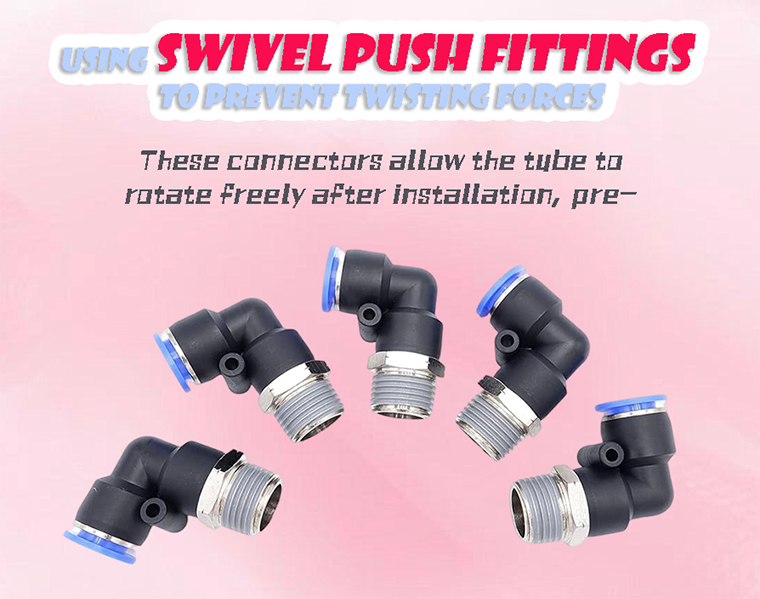
Another useful solution is the use of rotating or swivel push fittings. These connectors allow the tube to rotate freely after installation, preventing torsional stress.
When a PU tube is connected to a swivel fitting, the tube can adjust its orientation naturally without twisting. This design is particularly helpful in equipment where components move or vibrate.
In many pneumatic installations, swivel connectors are combined with components such as pneumatic push fittings, pneumatic cylinders, or air preparation units to create a more flexible air routing system.
Choosing the appropriate tubing material is just as important as proper installation. Flexible materials such as Polyurethane tubing are widely used in automation systems because they adapt easily to complex routing paths.
At the same time, rigid tubes like nylon hose remain valuable for high-pressure environments. In such systems, careful routing and proper fitting selection help reduce stress concentration.
A well-designed pneumatic layout typically combines high-quality air hose, compatible fittings, and proper installation techniques. This approach helps maintain stable airflow while extending the service life of tubing in industrial pneumatic systems.
(FK9026)
 PVC Tubing vs Polyurethane Tubing: Choosing the Better Air Hose for Modern Pneumatic Systems
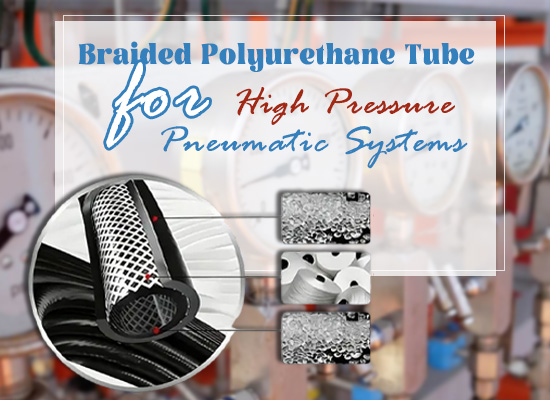 Braided Polyurethane Tube for High Pressure Pneumatic Systems
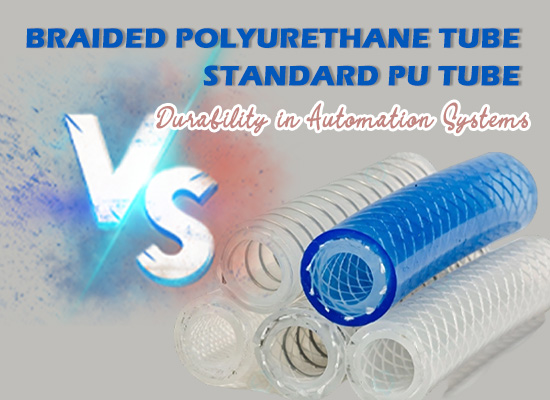 PUB Braided Polyurethane Tube vs Standard PU Tube: Durability in Automation Systems
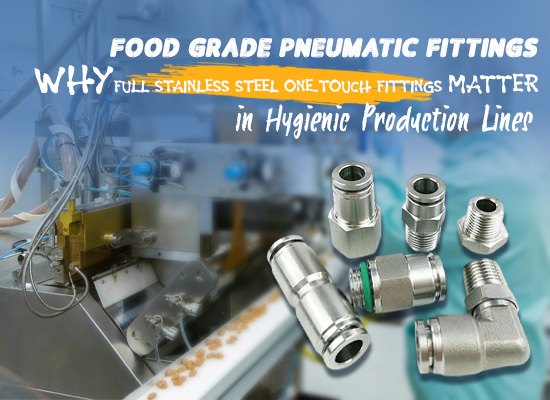 Food Grade Pneumatic Fittings: Why Full Stainless Steel One-Touch Fittings Matter in Hygienic Production Lines
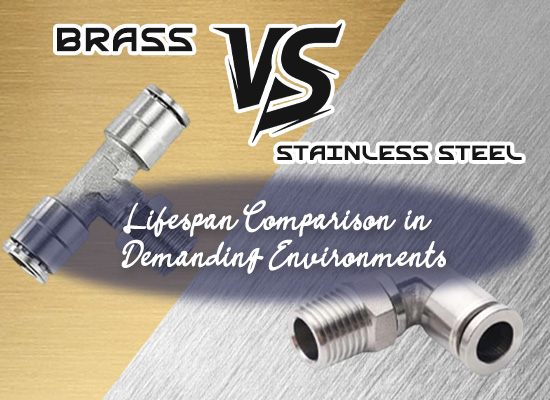 Brass vs Stainless Steel Fittings: Lifespan Comparison in Demanding Environments
You May Interest In
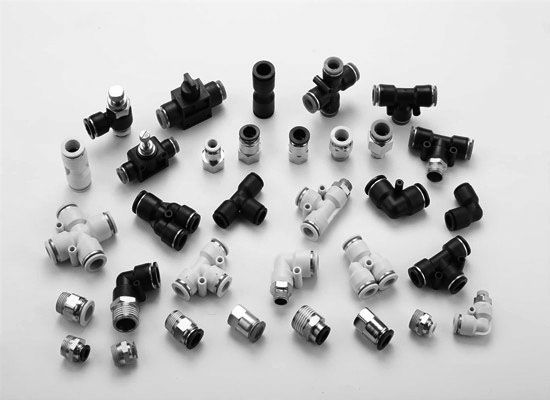
May 07, 2025 Blog
Comprehensive Analysis of Pneumatic Push in Fittings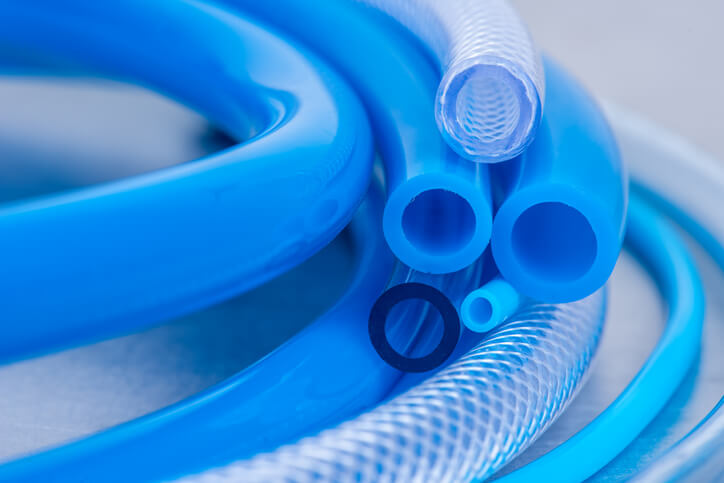
Apr 22, 2025 Blog
Solution for Nylon Tube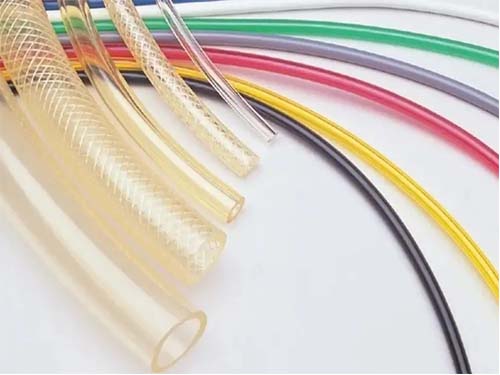
Apr 16, 2025 Blog
PVC Tubing vs. Polyurethane Tubing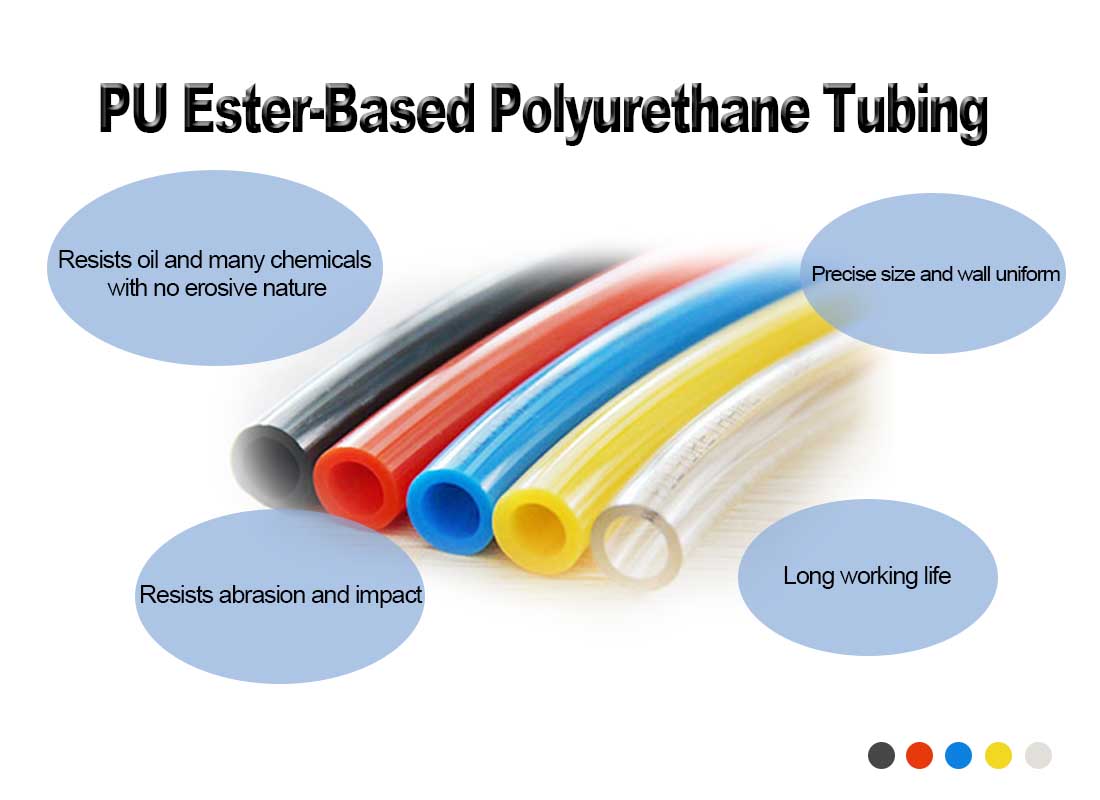
Apr 10, 2025 Blog
What is the difference between pu and pvc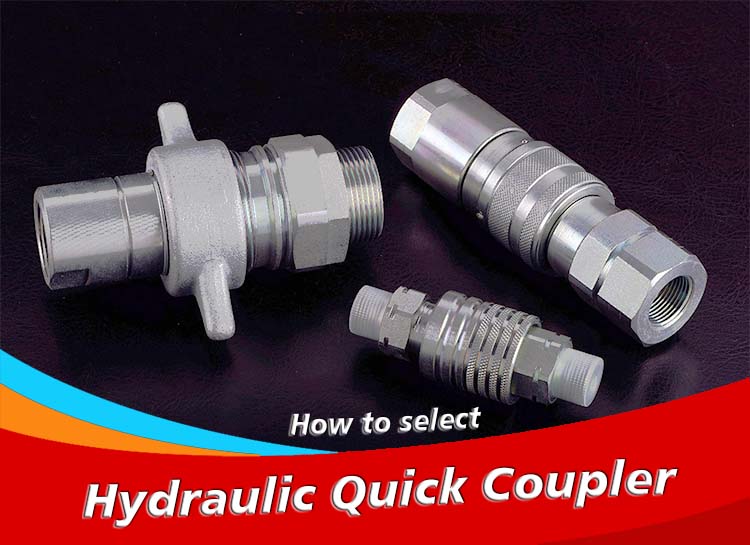
Feb 24, 2025 Blog
How to Identify Hydraulic Quick Couplers?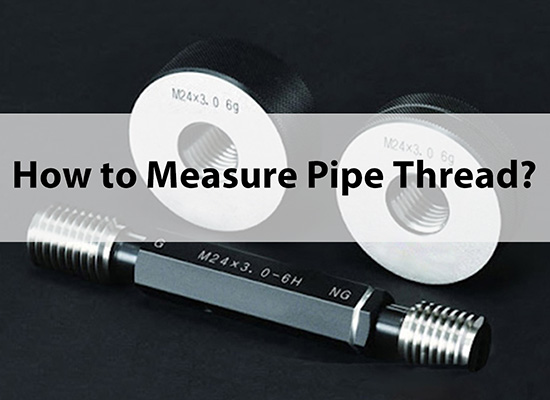
Jan 21, 2025 Blog
How to Measure Pipe Thread?
Jan 16, 2025 Blog
What Is Pipe thread?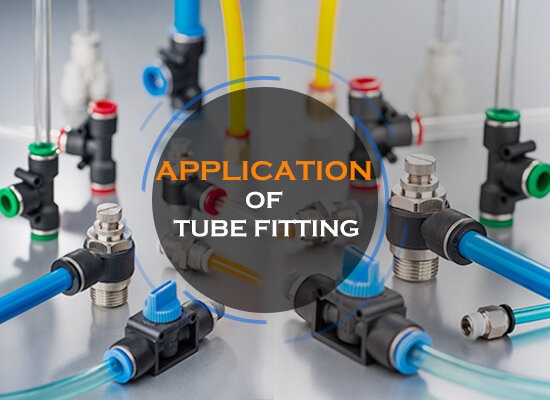
Dec 04, 2024 Blog
Application Of Tube Fitting
Jun 26, 2023 Blog
What Is The Difference Between LLDPE And LDPE?
Jan 17, 2023 Blog
What Are The Classification Of Plastics?
Get a free sample

Links: www.fescolo.com(Pneumatic)
FOKCA ©1998-2025 All Rights Reserved Sitemap